
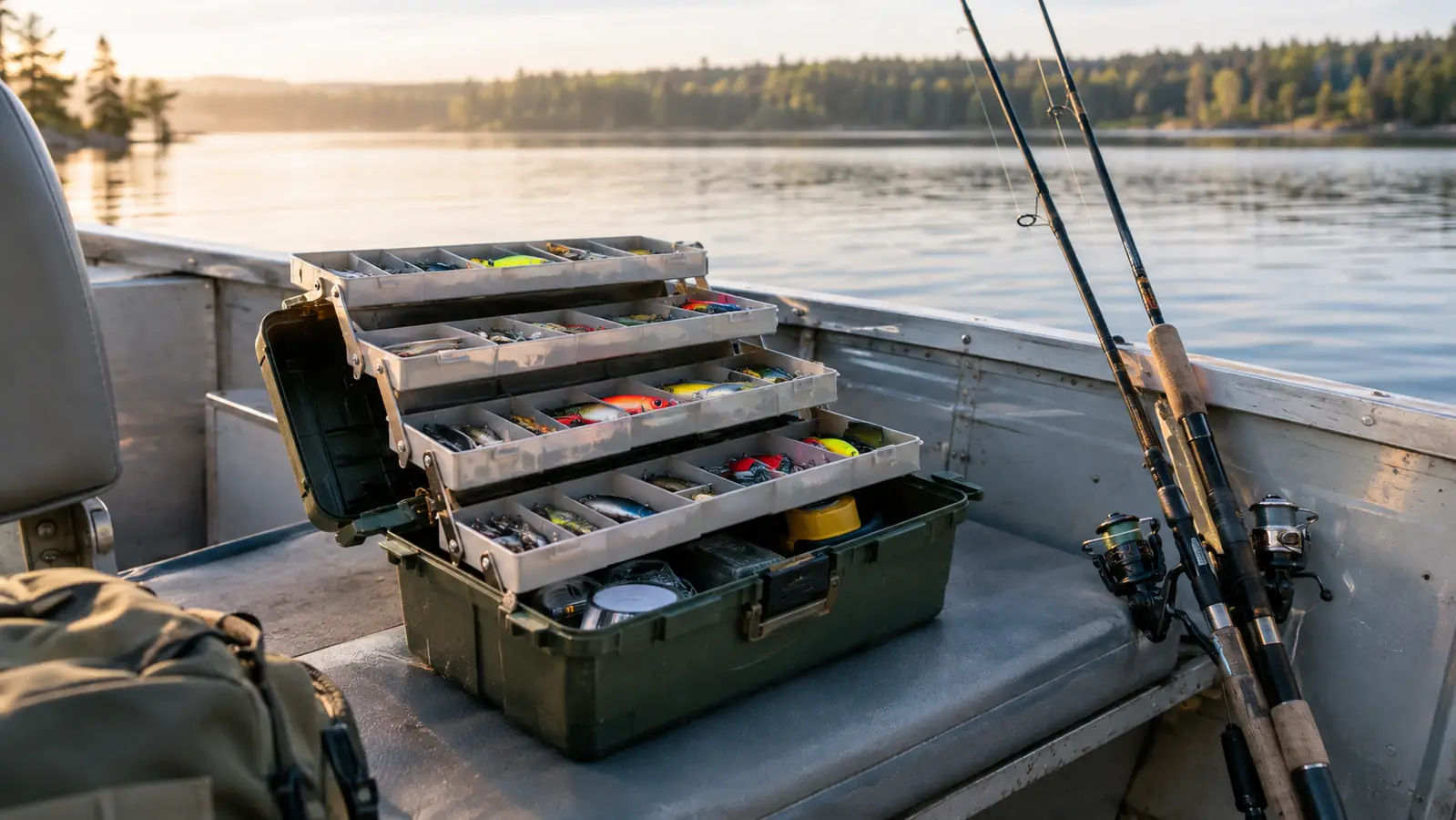
Every spring I tell myself the same thing: this year the tackle stays organized. And every spring, by the second trip, the boat floor looks like a garage sale. Jigs tangled with spinnerbaits. A hook in the bottom of the boat. The one crankbait I want sitting under two pounds of soft plastics I have not touched since last June. I have lost good fishing time to that mess, and I am guessing you have too. If that sounds familiar, the fix is not more willpower. It is a rack that gives every lure a home.
This is the system I wish someone had handed me years ago, back when I carried three plastic boxes loose in the boat and they slid around every time I hit a wake. The Plano Guide Series StowAway 4-By solves the sliding problem and the sorting problem at once, as long as you set it up with a plan. I picked it up this spring and ran it for the whole open-water season on Mille Lacs and a few smaller lakes around Brainerd. The rack holds four 3700 utility boxes, with a top storage compartment under a clear DuraView lid. It rides on the floor of my 16-foot aluminum boat and I carry it by the handle. It is not mounted, it does not raise anything to eye level, and it is not waterproof, so it stays out of standing water. That is the whole product. The system is what makes it work.
Sort it once, find it every trip.
The Plano StowAway 4-By gives you four 3700 boxes and a top tray under a clear lid. Here is how to load it so you stop digging.
Amazon Check Today's Price on Amazon →Here is what I learned the hard way. Organization is not about buying boxes. It is about deciding once where each thing lives, and then putting it back. The 4-By held up all season. The latches on the 3700 boxes worked fine, and the clear lid makes the top tray easy to read. But the rack only works if you build the habit. These are the five steps I used, in the order I used them. None of them takes longer than an evening, and most take ten minutes.
Step 1: Empty the old box and sort everything into piles
Dump it all out. Every box, every bag, the bottom of the boat, the pocket of the jacket you wore last fall. Do this on a table in the garage or on the dock on a calm day, not in the boat with the wind up. I did mine on a Sunday in early May, lake at 52 degrees, wind light out of the west, because that is the kind of detail I notice. The point of doing it out of the boat is that you can see everything at once. Spread it across the table and you will notice patterns, like the fact that you own eleven spinnerbaits and have thrown a spinnerbait twice in two years.
Then sort into piles by what the lure does, not by brand and not by how much you like it. My piles were hard baits, meaning crankbaits, jerkbaits and topwater; jigs and soft plastics; terminal tackle, meaning hooks, weights, swivels and snaps; and tools and accessories, meaning pliers, line clippers, hook remover and spare line spools. If a lure is rusted or the hooks are bent, this is the moment to retire it. You are not organizing junk. You are organizing what you will actually throw. One note: do this on a day you are not planning to fish, so you have time to be honest about what stays and what goes.
Why piles instead of just transferring boxes? Because most tackle boxes fail when they are organized around where things happened to land instead of around how you fish. Sorting by category is the base of everything that comes next. It also tells you what you actually own, which is usually less than you think once you separate the lures from the junk. I ended up retiring a whole shoebox of rusted hooks and cracked crankbaits that first weekend.
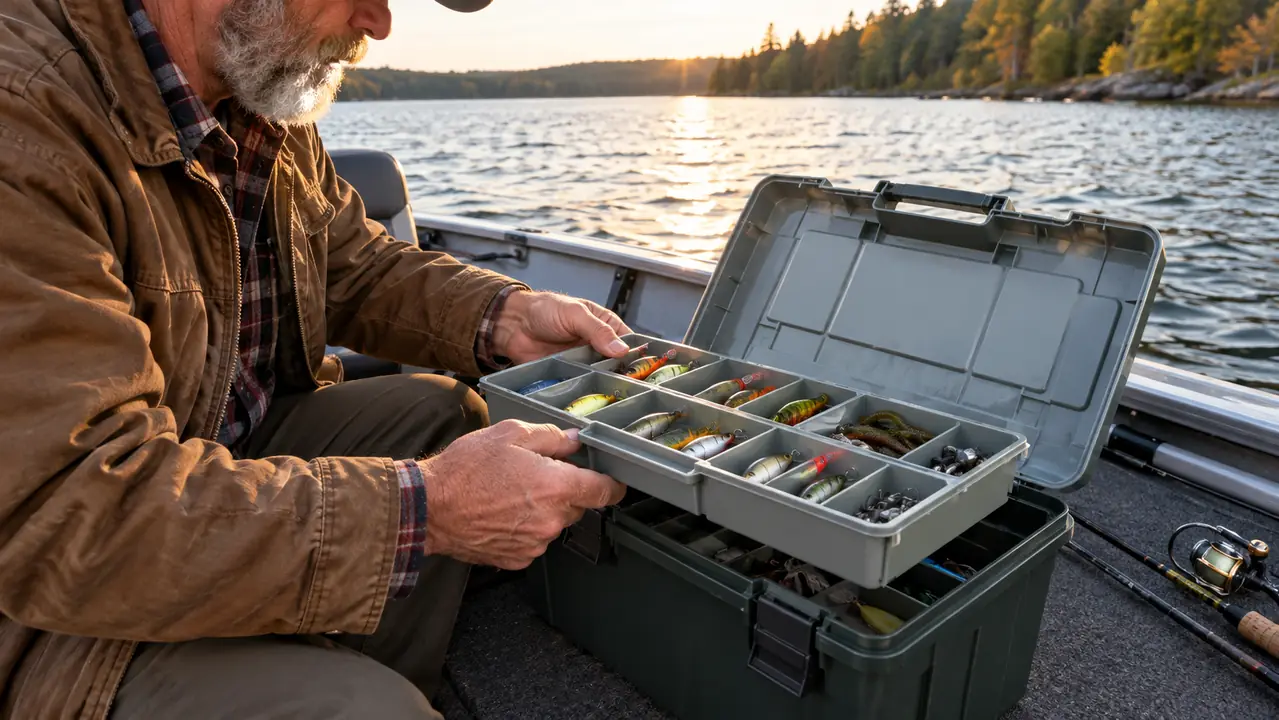
Step 2: Assign one 3700 box to each category
The 4-By holds four 3700 utility boxes, so four categories is the right number. If your piles are bigger than the boxes, cut the pile down. I keep about 40 crankbaits in one box because that is what I reach for first on this lake. The rest wait on a shelf in the garage. A box you cannot close is a box that will be a mess by July, and a shelf in the garage is free.
Box one is hard baits. Box two is jigs and soft plastics. Box three is terminal tackle. Box four is the box I change the most, the day's plan. That one gets the lures I expect to throw based on the conditions. Wind out of the north and water at 58 degrees means a jig, a crankbait and a spinnerbait. The rest stay home. The day's plan box is what keeps the other three boxes from getting ransacked.
This is the step where people get clever and color-code everything or label every slot. Skip that. The categories are enough. A strip of tape on the end of each box tells you what is inside without opening it, and that is the point of the whole exercise. You want to spend your time fishing, not reading labels. I tried labels one year and the labels were gone by July.
Step 3: Pack each box so the latches close and the hooks stay put
Open one box at a time. Lay the lures in so the hooks are not digging into the dividers or into each other. Crankbaits go nose to tail, hooks all facing the same way, so the box closes without pressure. Soft plastics go in a single layer, not stacked six deep, or they tangle into a knot you will be picking apart at the worst possible moment, usually right when the bite starts. If a bait has treble hooks, make sure the hooks point the same direction so they do not grab the next bait when you pull one out.
Terminal tackle is the one place I use the dividers hard. Hooks in one section, weights in another, swivels and snaps in a third. If the lid bows when you close it, you have too much in the box. The 3700 boxes have a good latch and it worked all season, but an overstuffed box will fight you every single time. Split the pile into two boxes if you have to, and put the second one on the garage shelf.
The goal is that every box closes flat without you pressing on it. That sounds small, but it is the difference between a box that stays organized and a box that turns into a junk drawer by August. I keep a small box of hooks and weights in the boat for the day, so the terminal tackle box does not get opened and closed a dozen times a trip. The less often a box opens, the longer it stays tidy.
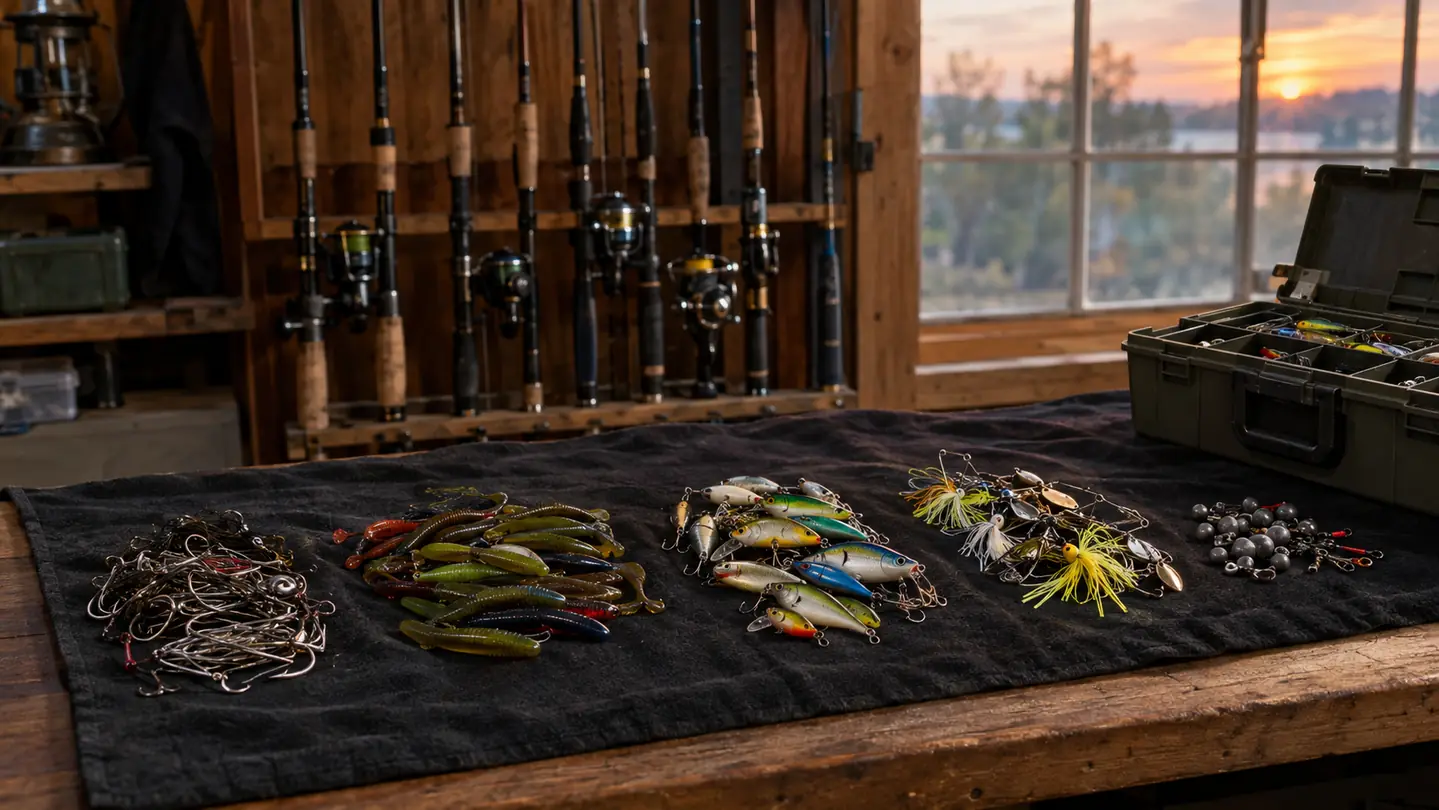
Step 4: Load the 4-By in the order you actually fish
The 4-By has four slots for the 3700 boxes and a top storage area under a clear DuraView lid. The top tray is the most valuable real estate on the boat, so it gets the things you grab every time you move: pliers, line clippers, hook remover, and the day's plan box. The clear lid means I can see what is in the tray without lifting it. That saves more time than any other single feature. On a low light morning I can glance at the taped labels and see exactly which box has the jigs.
The bottom slots are for the heavier, less used boxes. Terminal tackle goes on the bottom because I open it least. Hard baits go above it because that is the box I open most after the day's plan. The rack sits on the floor of the boat, so you will be bending to reach it. That is fine. It is not mounted and it does not raise anything to eye level. You are paying for a rack that keeps four boxes in one place, not a pedestal. On my 16-foot aluminum boat, floor storage is the only storage that makes sense.
One habit kept the system honest: when I put a lure back, it goes back in the same box it came from. That sounds obvious, but it is the whole system. The rack makes it easy because each box has a fixed home. If a lure goes in the wrong box, the system falls apart within a week. I know because I tested that theory in July.
Four boxes, four categories, one rack on the boat floor. I stopped losing the first half hour of every trip digging through a pile of soft plastics for the one jig I wanted.
Step 5: Do a ten minute reset at the end of the day
At the end of a day on the water, when you are tired and the light is going, the temptation is to stuff lures into whatever box is closest. That is how the garage sale comes back. I started doing a ten minute reset before I load the boat on the trailer. Every lure back in its box, every box back in its slot, the top tray wiped down. It takes less time than you think, and it saves you the whole next trip. Karen waits on the dock with the trailer lights on, and we are usually home before dark.
The 4-By is not waterproof, so I keep it out of standing water. On a rainy day it rides under the seat or in the truck. The latches handled a full season without complaint, and the rack is still straight. If you treat it like gear instead of a garbage can, it will hold up. Mine has. I would not leave it out in a downpour, but normal splashes from a rough ride have not bothered it.
Ten minutes at the dock beats an hour of untangling on a 48 degree morning with the wind blowing. That is the whole argument for the reset, and it is the whole argument for the rack.
What Else Helps
A few things I added that are not part of the 4-By but make the system better. A small dry bag for the pliers and the phone, so the top tray does not get wet. A magnetic hook pad for loose hooks that end up in the boat. And a second set of 3700 boxes for the winter, when I swap the open-water lures for ice fishing jigs. The rack stays the same. The boxes change with the season. That is the part I like best about this rack: it does not care what season it is.
One more thing. When the season is over, go through the boxes once before you put them away. Retire the rusted hooks, replace the line on the reels, and write down what worked. That way next spring you start from a clean base instead of last year's mess. The Plano StowAway 4-By is simple enough that the work is all in the setup, and the setup only happens once. After that, the rack does the organizing for you.
The other thing that helped was giving the 4-By a permanent spot in the boat. It lives on the floor just ahead of the middle bench, where it does not slide and does not block the oars. When I know where the rack is, I know where everything in it is.
Give every lure a home this season.
The Plano StowAway 4-By holds four 3700 boxes and a top tray under a clear lid. Set it up once with these five steps and you will find it fast in the boat.
Amazon Check Today's Price on Amazon →