
If you scout whitetails the way I do, you already know the problem. You hang a camera, wait two weeks, pull the card, and find 400 pictures of the same swaying branch and one blurry tail disappearing into the brush. I have done that with more cheap cameras than I care to count. So when I hung a two-pack of WOSODA trail cameras on the back 80 last August, I did not expect much. I expected to be back at the truck before dark, and I expected to be disappointed by the time the season ended.
A full season later, I am still a little surprised. The WOSODA 2-pack did not turn me into a better hunter, but it did something more useful. It showed me exactly where the deer were moving, and it did it all season on one set of lithium AAs. That is the review I did not expect to write.
The Quick Verdict
A solid, no-frills non-cellular camera that runs all season on lithium AAs and takes sharp daytime photos. Night shots are fine for scouting, not for framing. The trigger can miss the front half of a fast deer, and 48MP is marketing math, not real detail.
Amazon Check Today's Price →Two cameras, one season, zero battery changes
The WOSODA 2-pack is the setup I hung in August and did not touch until the snow flew. If you check cards the old-fashioned way, this is the pair to beat.
Amazon Check Today's Price on Amazon →How I've Used It
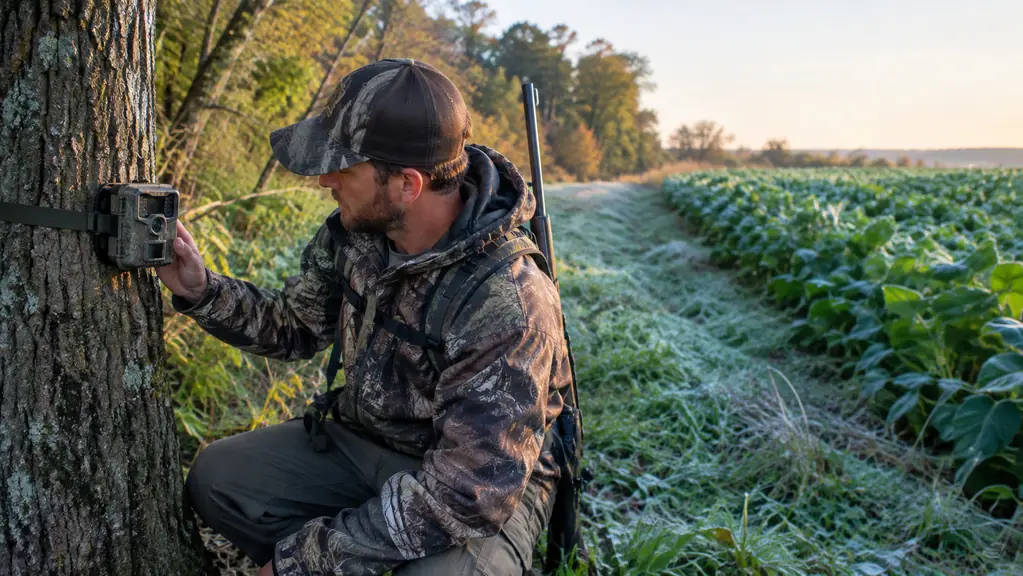
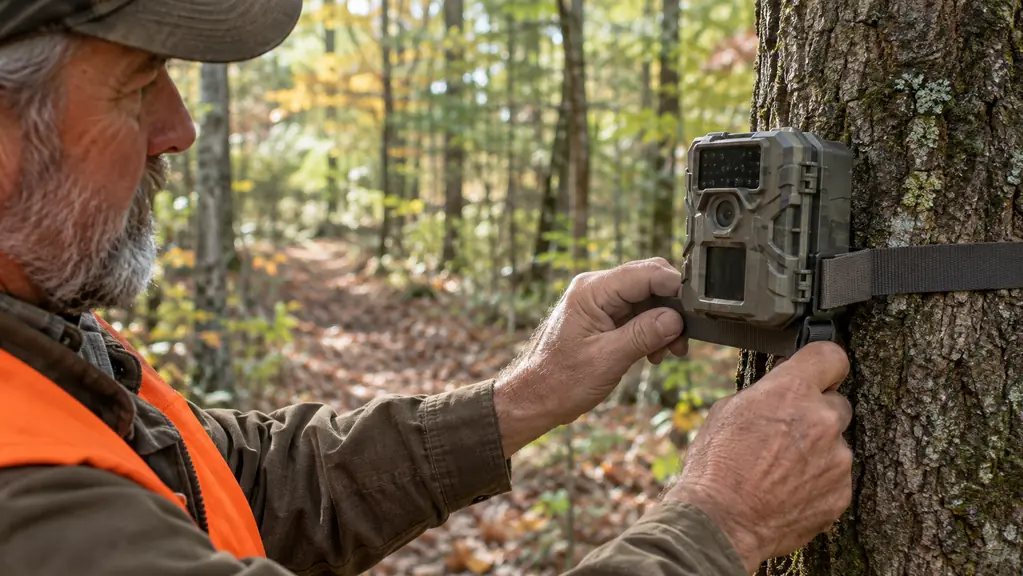
I hung both WOSODA cameras the last Saturday of August, August 28, in the late afternoon when the light was starting to go. One went on a scrape line along the north edge of the food plot, the other on a trail that cuts through the tag alders toward the bedding cover. Both went up at chest height, aimed slightly downhill, the way I have hung every camera for the last ten years. Chest height is the sweet spot for a scrape line camera. Too high and you get the tops of heads. Too low and every passing squirrel sets it off. I cleared a few low branches in front of each one first, because a branch that looks small in August can be a wall of leaves by October. I added a cable lock to each because the included strap is thin, and I do not trust a thin strap to hold a camera through a Minnesota November.
I checked them every ten days to two weeks, pulled the SD cards, and looked at everything on the laptop in the kitchen. Karen got used to the slideshow. The cameras stayed out through the November firearms season and came down in early January, which means they covered roughly nineteen weeks of deer movement, from late summer patterns through the rut and into late season. I used the same cards all season, a couple of 32GB cards I had in the drawer, and I never filled one. Even at three photos per trigger, nineteen weeks of activity fit on a single card with room to spare. That is worth knowing if you are used to cameras that chew through storage.
The first check was the one I remember best. I pulled the card from the scrape line camera on September 6, a cool Sunday morning, and sat on the tailgate of my F-150 to flip through the files on the camera's own screen before I even got home. There were 214 photos on that card, and maybe ten of them were wasted on a branch moving in the wind. The rest were deer, mostly does and a pair of young bucks, all traveling the same direction along the edge of the food plot. That one card told me more about the property than I had learned in the previous two seasons of walking it. The second camera told the same story from the tag alder trail, deer using it as a hallway between the bedding cover and the plot.
Both cameras ran the entire stretch on the same set of lithium AAs. That is the single fact that surprised me most. I have had cameras eat alkaline batteries in three weeks, and I have had cameras go dark in the middle of the rut. These two never missed a check. I looked at the battery indicator on both cameras at every card pull, and neither one dropped below two bars until the last week of November.
What the WOSODA Cameras Actually Caught
Daytime photos are the strong suit. On a sunny October afternoon, the WOSODA cameras produced sharp, well-exposed images of deer at twenty to thirty yards, clear enough to count points and pick out individual markings. That is what scouting actually requires, and the cameras delivered it consistently. I had one buck on the scrape line for three straight checks, and the daytime shots let me see the slight limp in his front left leg that I would have missed in a grainy night photo. He was a typical 8-pointer with a broken G2 on his right side, and the camera caught him on October 9, October 17, and October 24, all in daylight, all on the same scrape. I never saw him from the stand, but I knew he was there.
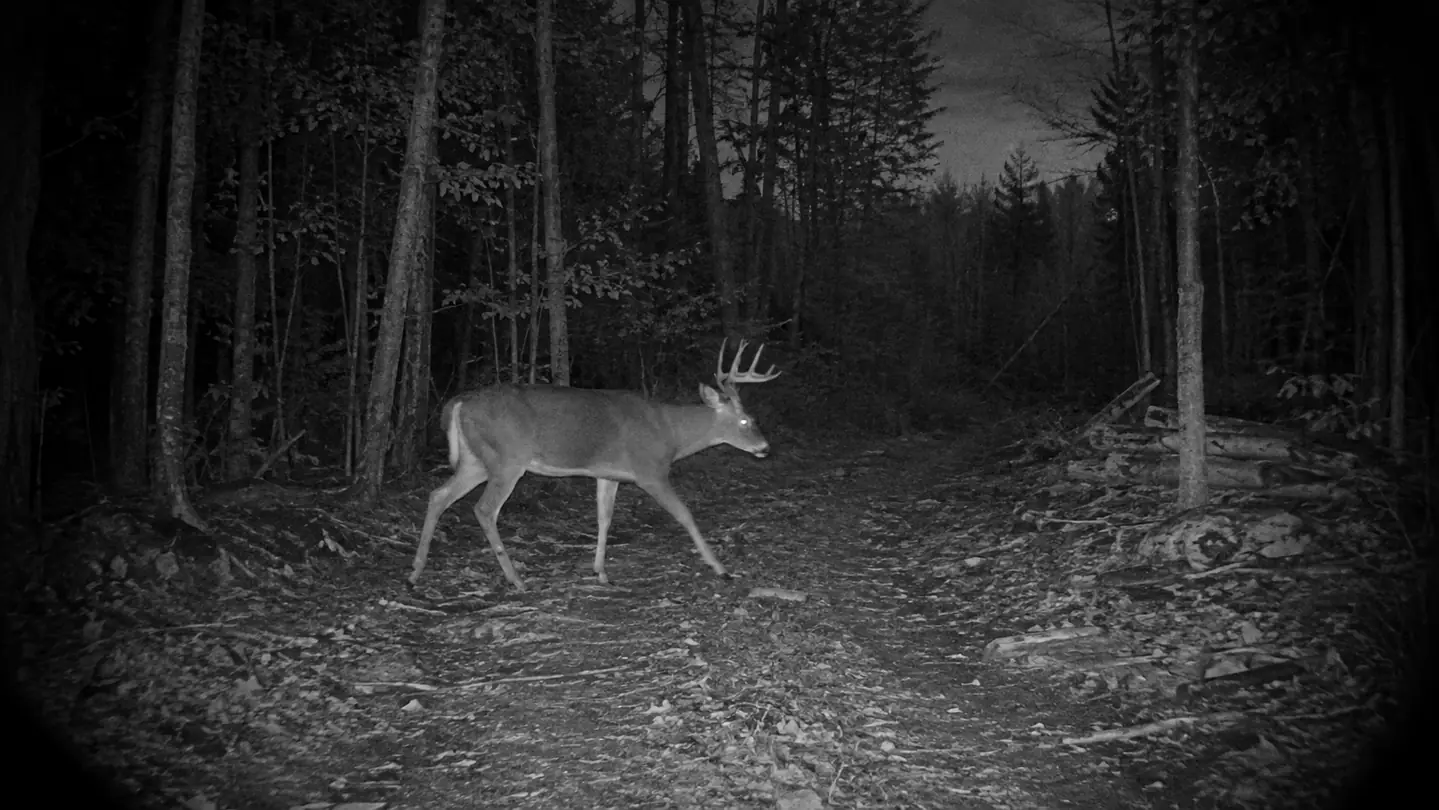
Night photos are where the WOSODA cameras show their limits. They are perfectly usable for scouting, which means you can tell a buck from a doe and see which direction they are traveling. But they are grainy, and the infrared glow washes out detail beyond about forty feet. I never once mistook a night photo for a daytime photo, and I never once got a night photo I would call sharp. For the job I needed done, that was enough. For someone who wants trophy-quality night images, it will not be.
The trigger is the other honest weakness. On a deer walking slowly, the WOSODA cameras caught the whole animal, head to tail. On a deer moving fast, especially a doe leading a group, the trigger sometimes caught only the back half. I have a whole folder of deer rumps to prove it. It is the nature of a camera in this class, and it is worth knowing before you buy. I tried setting the trigger interval shorter, and it helped some, but it also filled cards faster. The camera's recovery time between shots is about what I expect at this level, and no setting change will make a fast-moving deer pose for the lens.
One sequence from mid-October shows exactly what I mean. A group of four does came through the tag alder trail at a trot, probably bumped by another hunter on the neighboring property. The camera fired on the first doe, caught the second one clean, and then caught the third and fourth as nothing but backsides and tails disappearing into the cedars. Out of eleven photos in that burst, four were keepers. That is about the ratio I saw all season. When deer are moving slow and calm, the WOSODA cameras are excellent. When deer are moving like deer, you get what you get.
The 48MP Number, and What It Really Means
The product title says 48MP, and the cameras do produce files that big. But 48MP is an interpolated output size, not real optical detail. The actual sensor captures less, and the camera stretches the file to fill the frame. What that means in the field is simple: the daytime photos are sharp enough to count points at close range, and the night photos are grainy no matter how many megapixels the file claims.
I tested the resolution the way I test every camera. I took a daytime photo of a buck standing broadside at about twenty-five yards, zoomed in on the laptop screen until the image broke apart, and backed off until it looked right. A good 12MP camera from a few years ago held detail at roughly the same zoom level as the WOSODA file. That tells me the real sensor is well under the 48MP the box claims, and the camera stretches the file to reach that number. It does not change how I use the camera, but it changes how I read the box.
I would rather have an honest 12MP sensor with good glass than an inflated 48MP number with a mediocre lens. The WOSODA cameras are a good value at their real resolution, and a worse value if you believe the headline number. Buy them for what they actually do, not for what the box says.
Battery Life and the Non-Cellular Question
I ran both WOSODA cameras on lithium AAs, and both lasted the entire season. That is the headline. I have never owned a cellular camera, and I do not plan to, because my hunting setup does not need one. I check cards every ten days to two weeks anyway, and the walk to the cameras is part of how I learn the property. I look for rubs, I check the scrape, I read the sign while I am out there. A camera that sent me a text would save me the trip, but it would also take away the part of scouting I enjoy. If you hunt a piece of ground you can only visit every few weeks, a non-cellular camera means you might miss the one week the big buck shows up. That is a real limitation, and it is the main reason someone should look at a cellular camera instead.
The cold was the real test. We had a stretch in mid-November where the temperature did not get above zero for four days, and the wind came out of the northwest hard enough to lay the grass down. I drove out expecting to find both cameras dead or at least blinking low battery. Both fired off their full sequence of photos like it was September. Lithium AAs handle cold far better than alkaline, so part of that is the battery choice, but the cameras themselves never skipped a beat. The only change I noticed in the cold was the trigger, which seemed a touch slower on the coldest mornings, though that might have been the deer moving faster to get out of the wind.
For my situation, the tradeoff is easy. The WOSODA cameras cost a fraction of a cellular setup, they never need a data plan, and they ran the whole season on one set of batteries. I know exactly what I am getting when I pull a card, and I know the camera was there the whole time.
What I Would Change
The included strap is the first thing I would change. It is thin, and it does not inspire confidence on a windy ridge or a tree with rough bark. I added a cable lock to both cameras before they went up, and I would not hang one without it. The locks took about a minute per camera and cost next to nothing. It is the cheapest insurance I own. The strap alone might hold a camera through a mild season, but it is not something I would trust with a camera I planned to leave out for nineteen weeks.
I would also change the menu. The WOSODA cameras have a small screen and a button layout that takes some getting used to. It is not difficult, exactly, but it is not intuitive either. I set both cameras up in the kitchen before I hung them, which I recommend to anyone. Do not learn the menu in the dark with cold fingers.
One thing that bit me early: I set the first camera to take three photos per trigger and the second camera to take one, because I did not read the menu carefully enough the first time through. It took me two checks to notice the difference. Neither setting is wrong, but you want both cameras set the same way if you are comparing movement across the property. Read the manual once, set both cameras the same, and write the settings on the card case. That sounds obvious, and I still managed to skip it.
What I Liked
- Both cameras ran the entire season on one set of lithium AAs
- Daytime photos are sharp enough to count points at close range
- Two cameras in the box for less than many single cameras cost
- Simple non-cellular operation, no data plan, no app to fight with
- Weatherproof through rain, wind, and a Minnesota November
Where It Falls Short
- Night photos are grainy, fine for scouting but not for framing
- Trigger sometimes catches only the back half of a fast deer
- 48MP is an interpolated number, not real optical detail
- Included strap is thin and needs a cable lock to trust
- Menu and buttons take some getting used to
Both cameras ran the entire season on the same set of lithium AAs. That is the single fact that surprised me most.
Who This Is For
The WOSODA 2-pack is for the hunter who checks cards the old-fashioned way. If you hunt a piece of ground you can visit regularly, if you do not want a data plan, and if you want two cameras in the woods for the price of one, this is a strong pick. It is also a good choice for someone who is new to trail cameras and wants to learn the habit without spending a pile of money. The daytime photos will teach you more about deer movement than you expect, and the battery life means you will not be hiking in to swap AAs every other week.
Who Should Skip It
Skip the WOSODA cameras if you need to know what is on your camera from the truck. A cellular camera is the right tool for that job, and no non-cellular camera will ever replace it. Skip them too if you want sharp, detailed night images, because the night photos here are scouting-grade, not gallery-grade. And if you are the kind of hunter who wants to set a camera and forget it for a month, the trigger speed and the thin strap will probably frustrate you. This is a camera for someone who checks cards, checks them regularly, and wants honest value for the money.
The pair I hung in August and pulled in early January
If you check cards the old-fashioned way, the WOSODA 2-pack is the best value I have used in years. Two cameras, one season, zero battery changes.
Amazon Check Today's Price on Amazon →