
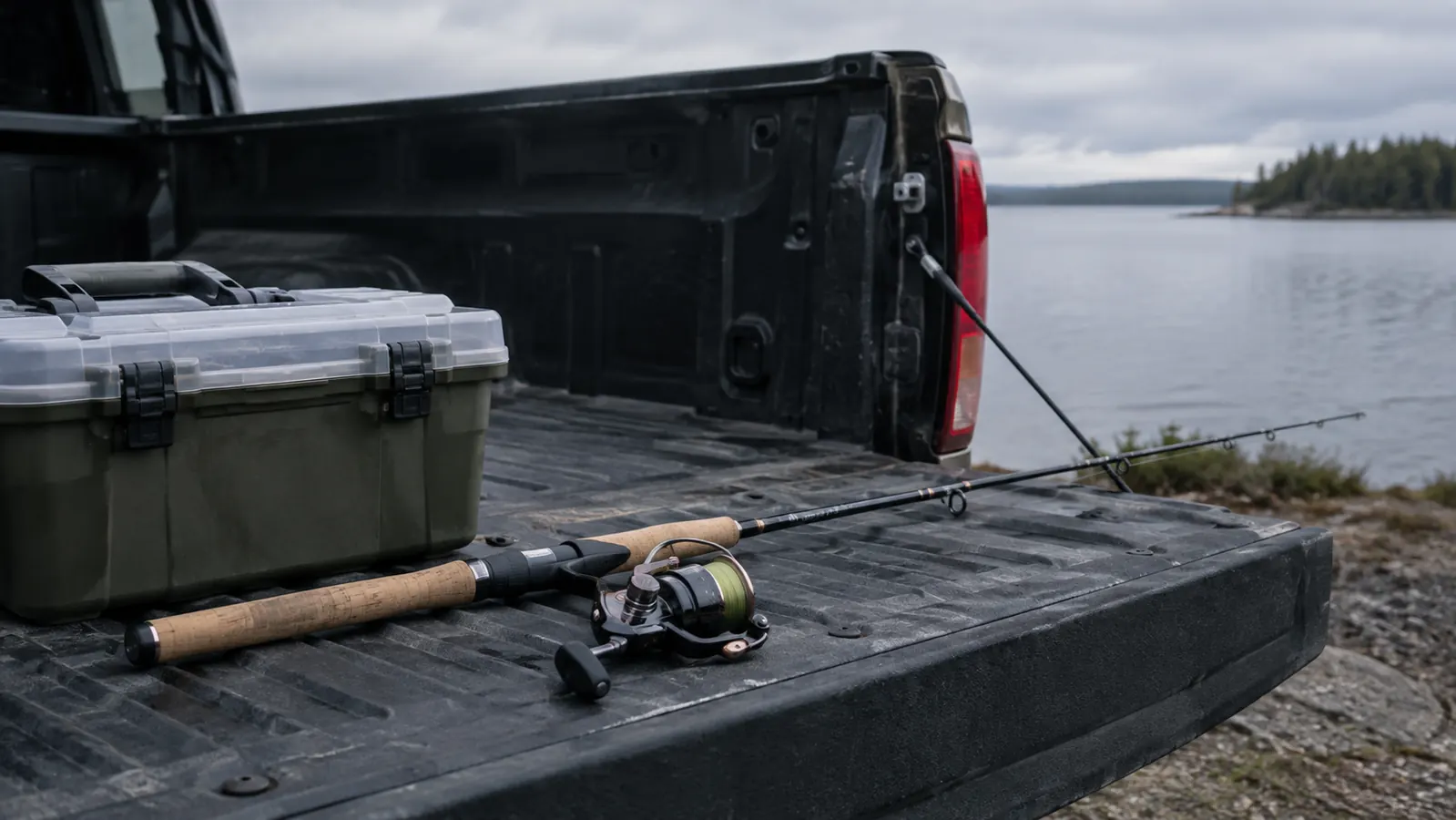
The Okuma Voyager travel combo spent the whole open-water season behind the seat of my 2013 F-150. May through October, it went on every evening stop at the lake, every quick trip after a morning of chores, and a few full days in the boat with Karen. It is the rod I grabbed when I had forty minutes of light left and no plan. By the time the ice started forming, I had a clear answer on what this travel kit does well and where it cuts corners.
I am Curt Lindqvist, retired electrical lineman, and I fish walleye and bass on the lakes around Brainerd, Minnesota, out of a 16-foot aluminum boat. I bought the Okuma Voyager VS-605-20 last spring because I wanted a spinning combo that could live in the truck without getting beat up. This is how it actually fished for one full season.
The Quick Verdict
A travel spinning combo that fishes better than you expect from a kit this compact, with a smooth drag and a case that earns its spot behind the truck seat. It is not a high-end rod, but it is honest gear that puts walleye and bass in the boat.
Amazon Check Today's Price →A travel combo that actually earns its spot in the truck
The Okuma Voyager VS-605-20 broke down into its travel case, rode behind my seat all season, and still handled evening walleye and bass without complaint. Check today's price on Amazon and see if it fits your truck too.
Amazon Check Today's Price on Amazon →How I've Used It
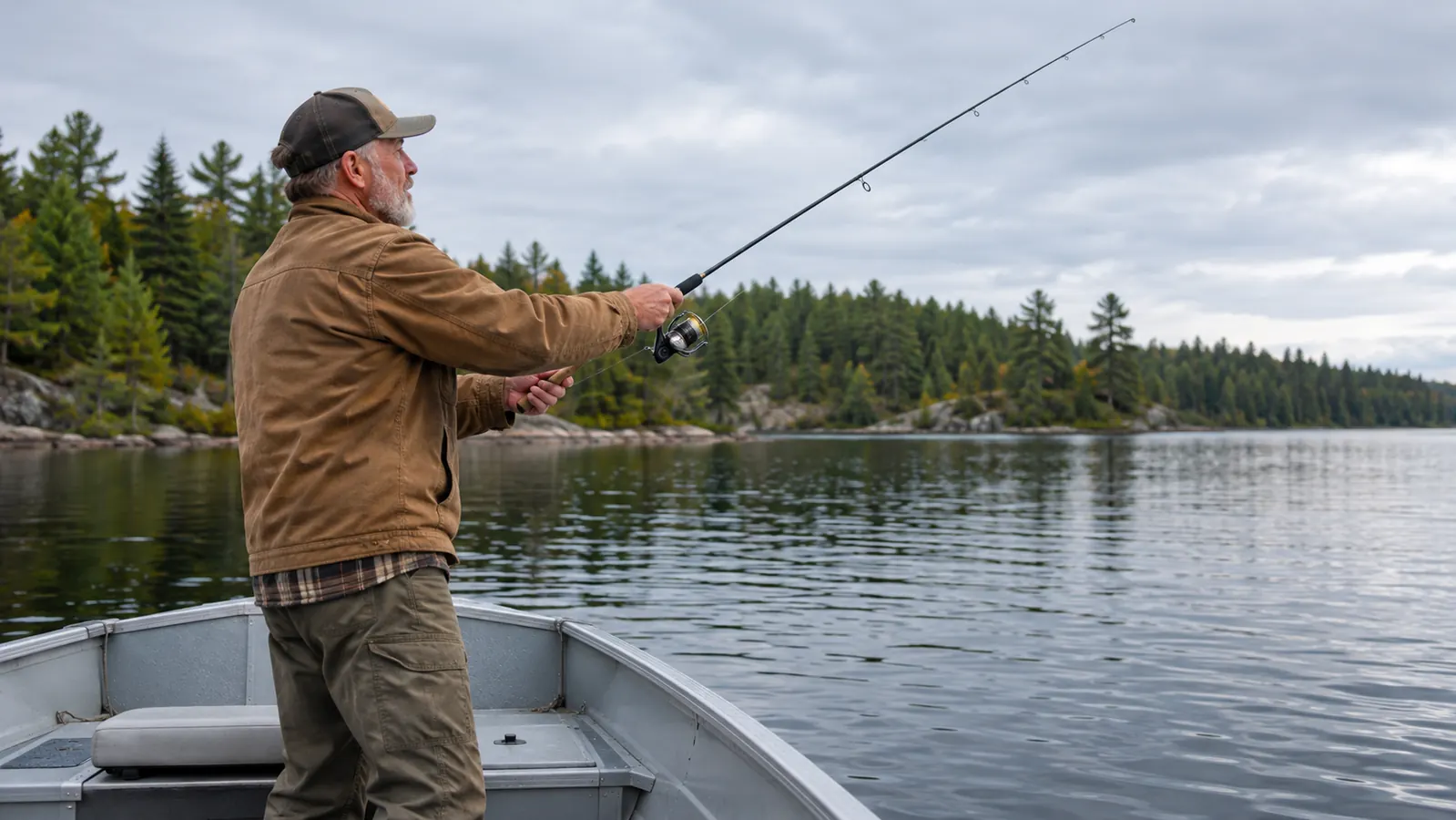
I spooled the Voyager with 8 lb monofilament and left it that way all season. I thought about braid for the extra sensitivity, but the reel is on the smaller side and 8 lb mono casts light jigs better without wind knots. That turned out to be the right call. I used a simple improved clinch knot on the jigs all season and never lost a fish to a knot failure. For walleye I mostly fished jigs and slip bobbers. For bass I threw spinnerbaits and soft plastics. The rod handled both without feeling like I was forcing it to do something it was not built for.
The travel case lived behind the seat of my F-150 from May through October. That is the real test of a travel combo. It got bounced around, leaned on, and covered in lake water more than once. The case held up fine, and the rod sections stayed snug. One evening in late May I pulled into a landing with maybe forty minutes of light left. I had the Voyager out of the case, a 1/8 oz jig tied on, and my first cast in the water within two minutes of killing the truck. That is the whole point of keeping a combo in the truck.
It rode behind the seat next to a rain jacket and a set of jumper cables, and it never shifted or rattled. It was easy to grab one-handed while I carried a tackle bag in the other. That sounds like a small thing, but when you are hurrying to beat the last light, you do not want a rod that takes two hands and a wrestling match to get out of the truck. I never once had to fight with a section that would not seat right, which has been my experience with cheaper travel rods.
Karen used it more than I expected. She likes fishing from the boat, and the Voyager became the spare rod she reached for most. One June evening she had a wind knot in her own line that she could not untangle in the failing light, so I handed her the Voyager. She fished the rest of that trip with it and landed a 19-inch walleye on a slip bobber. After that, she asked for it by name.
I rinsed the reel with fresh water maybe six times all season. That is not a brag, it is the level of care this combo needed. It got splashed, dusty, and left in a hot truck all summer, and it never gave me a reason to do more.
What the Okuma Voyager Gets Right
The first thing you notice is the drag. For a travel combo, the Okuma Voyager's drag is genuinely smooth. One warm evening in July, a northern pike grabbed a jig meant for walleye. The fish ran maybe forty feet before the drag started singing, and it felt light for a pike that size. The hook stayed planted and the fish came to hand. That is what a smooth drag does for you.
The rod has enough backbone for bass around weeds and enough tip for light walleye jigs. That balance is harder to find than it sounds. A lot of travel rods are either too stiff to feel a subtle bite or too soft to set a hook through a spinnerbait. The Voyager sits in a useful middle ground. I threw 1/16 oz jigs for panfish and 3/8 oz spinnerbaits for bass with the same setup, and the rod loaded up properly at both ends of that range.
The reel casts well for its size. With a 1/8 oz jig and 8 lb mono, I could reach the far edge of a weed bed without forcing it. The spool is small, so you learn to slow your cast a little, but that is true of any small spinning reel. What matters is that the line came off smoothly, no loops, no tangles, no nests. I cannot say that about every reel I have owned.
The travel case is the other big win. It is compact enough to fit behind the seat of my truck, and it protects the rod well enough that I never worried about it back there. I have broken rods in the past by leaving them loose in the bed. The Voyager's case removes that whole category of problems. The rod came out of the case straight every single time, which matters more than people think. A rod that is stored bent develops a set, and a rod with a set casts poorly forever.
The drag let a pike run without binding up, and that is the difference between landing a fish and watching it shake the hook.
Where It Falls Short
The Okuma Voyager is not a high-end rod, and it does not pretend to be. The guides are fine, but they are not the kind of guides you find on a premium rod. The reel seat is functional, not fancy. If you are used to premium gear, you will notice the difference. If you are used to gear that works, you will not mind. I fish plenty of mid-range gear, so none of this bothered me, but I want to be straight about it.
The reel is on the smaller side. It handled 8 lb monofilament and lures up to about 3/8 oz all season without complaint. One afternoon I tried throwing a half-ounce swimbait, and the combo felt overloaded. I made a few casts and went back to what it does well. For what this combo is meant to do, the reel never hesitated. I would rather have a reel that does its job every time than one that promises more and delivers less. If you want to throw heavy swimbaits or fish for muskies, this is not the combo for you. It is built for walleye, bass, panfish, and the occasional pike that happens by.
The case is not something I would trust to airline baggage handlers, and I would not throw it in the back of the truck with a load of firewood. It is built for the kind of travel it actually does: riding behind a seat, going from the truck to the boat, staying dry and snug. For that it is plenty. For rough travel, you would want something sturdier. I treated it accordingly and it never let me down.
You also give up a little feel with a multi-piece rod compared to a good one-piece. I do not think most anglers would notice it on a jig bite, but on a light walleye bite in the fall, I found myself wishing for a touch more sensitivity. I noticed it most on a slow presentation when walleye take a jig so soft you barely feel the weight change. A one-piece rod would have told me sooner. The Voyager still told me, just a heartbeat later. It is the tradeoff you accept for the convenience of the case.
How It Fished Over a Full Season
May was jigging walleye on the rocks. The Voyager had enough sensitivity to feel the bottom and enough tip to detect a light bite. The best night came in early October, though. Water temp had dropped into the low 50s, and the walleye had moved back onto the rocks. I fished from shore at a lake access with a jig and a minnow, the kind of evening stop the combo was made for. The Voyager's tip told me exactly when a fish picked it up, which is the whole game with a light walleye bite. I landed three fish in about an hour, the biggest right at 24 inches.
June was bass on the weed edges, where the backbone came into play. I threw a 3/8 oz spinnerbait along a weed line and caught four bass in about an hour, the best right at 4 pounds. The rod had enough guts to turn a bass headed for the weeds, which is where most of them win. That one did not get the chance. The hook set through the spinnerbait's big treble without bending the rod into a noodle, which is the thing I worry about with travel rods.
July and August were slow evenings with slip bobbers, and the rod was light enough to hold all evening without your arm getting tired. One afternoon a thunderstorm chased us off the lake. Karen and I sat in the truck while the rain hammered the roof. When it let up, I took the Voyager to the shore and caught two bass on a spinnerbait in the last twenty minutes of light. That is exactly the kind of fishing this combo is for. When the moment presents itself, you are ready, and the anglers who left their rods at home were driving away while I was tying on a spinnerbait.
One Sunday in late September, Karen and I took the boat out for the afternoon. The wind laid down by evening and the water went flat. I handed her the Voyager with a slip bobber and a leech, and I fished a jig from the front of the boat. We ended the day with five walleye between us, and she landed the biggest one, a 22-incher, on the Voyager. It was one of those evenings you remember all winter.
September and October were the best months. The walleye started feeding up, and the Voyager was ready every time I pulled over on the way home from an errand. One evening I stopped at a lake I had not fished in years, tied on a jig, and caught a 21-inch walleye on the second cast. I landed walleye up to about 24 inches and bass up to about 4 pounds on this combo. Nothing that would make a magazine cover, but a solid season of fish.
The reel never gave me trouble. It got splashed, dusty, and left in a hot truck all summer. The drag stayed smooth, the bail stayed tight, and the handle never loosened. I did not have to take it apart or adjust the drag mid-season. I have had cheaper reels need the bail spring replaced after one season. Not this one. That reliability is worth more than a fancy reel that needs constant attention.
Who This Is For
The Okuma Voyager is for the angler who wants a fishing setup that is always there. It is for the person who keeps a rod behind the truck seat for evening stops, the person who wants a spare combo for a guest, or the person who wants a travel rod that packs down small without fishing like a toy. If you have ever driven past a lake with a rod at home and talked yourself out of stopping, this combo is aimed directly at you. It does not need a rod locker or a dedicated spot in the boat. It just needs a few inches behind the seat.
It is also a good choice for a first spinning combo. The drag is smooth enough to learn on, the rod is forgiving, and the case means it will survive being tossed in a trunk. If you are starting out and want one setup that does a little of everything, this is a reasonable place to start. You can always move up later, but you will not outgrow this one as fast as you think.
Karen used it as the spare rod on the boat all season, which is another kind of recommendation. A spare rod has to be easy for someone else to pick up and fish without coaching. The Voyager is that. No one needs a lesson to use it.
Who Should Skip It
Skip the Okuma Voyager if you need a heavy rod. Muskie anglers, swimbait fishermen, and anyone throwing big hardware will want something with more backbone and a larger reel. This combo is built for light to medium freshwater fishing, and pushing it beyond that will just frustrate you.
Skip it too if you want a premium feel. The Voyager is honest, functional gear, not a high-end rod. If you are used to cork handles, premium guides, and featherlight blanks, you will notice the difference. Buy it for what it is: a dependable travel combo that fishes well and lives in your truck.
And if your fishing involves long days of casting heavy lures, you will be happier with a full-size rod. The Voyager is a light-to-medium combo that earns its keep on evening stops, not a replacement for a serious boat rod. It is a second rod, and a good one, but it knows its role.
What I Liked
- Smooth drag that handled walleye, bass, and one big July pike
- Compact travel case that fits behind a truck seat and protects the rod
- Good balance of backbone and tip for light to medium freshwater fishing
- Reel stayed reliable all season with minimal care
- Ready to fish in about two minutes from the case
Where It Falls Short
- Not a heavy rod; skip it for muskie or big swimbait fishing
- Guides and reel seat are functional, not premium
- Case is not built for rough travel like airline baggage
Give the Voyager a season behind your seat
After a full season of evening walleye stops and bass trips, the Okuma Voyager earned its place in my truck. If you want a travel combo that is always ready, check today's price on Amazon.
Amazon Check Today's Price on Amazon →