
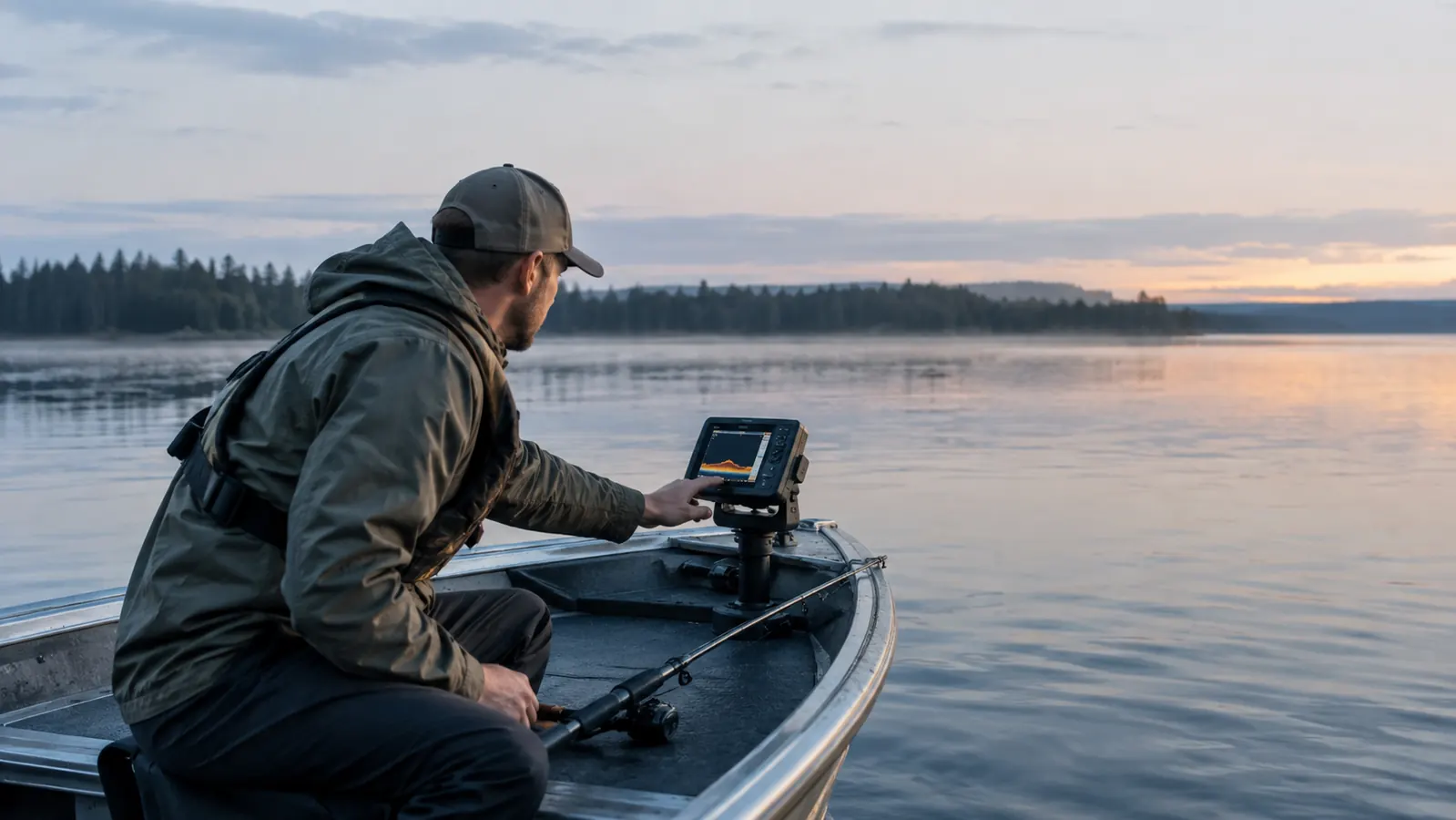
Walleye are not hard to catch. They are hard to find. I spent years dragging crankbaits over water that looked right and came home with nothing to show for it, because looking right from the surface and holding fish are two different things. The Garmin Striker 4 changed that for me this season. It is a small unit, a 3.5 inch screen, and it does not have side imaging or all the fancy bells. What it does have is a clear picture of what is under the boat, and that is what finds walleye.
I mounted the Garmin on the transom of my 16 foot aluminum boat this spring and ran it through the whole open water season, then kept using it through the first ice. Here are the ten reasons it earns its spot on my boat, in the order I actually use them.
See the Bottom Before You Cast
The Garmin Striker 4 shows you the breaklines and weed edges where walleye hold, so you stop fishing water that looks good and start fishing water that holds fish.
Amazon Check Today's Price on Amazon →It Shows You the Break, Not Just the Bottom
Walleye relate to structure. A flat bottom at 18 feet can be empty while the drop to 24 feet right next to it holds a dozen fish. The Striker 4 paints that break clearly, and once you see it you stop guessing where the edge is. I found my best walleye spot of the year this way, a break that ran from 16 to 22 feet along a point I had fished for years without knowing it was there.
Weed Edges Show Up as a Wall You Can Follow
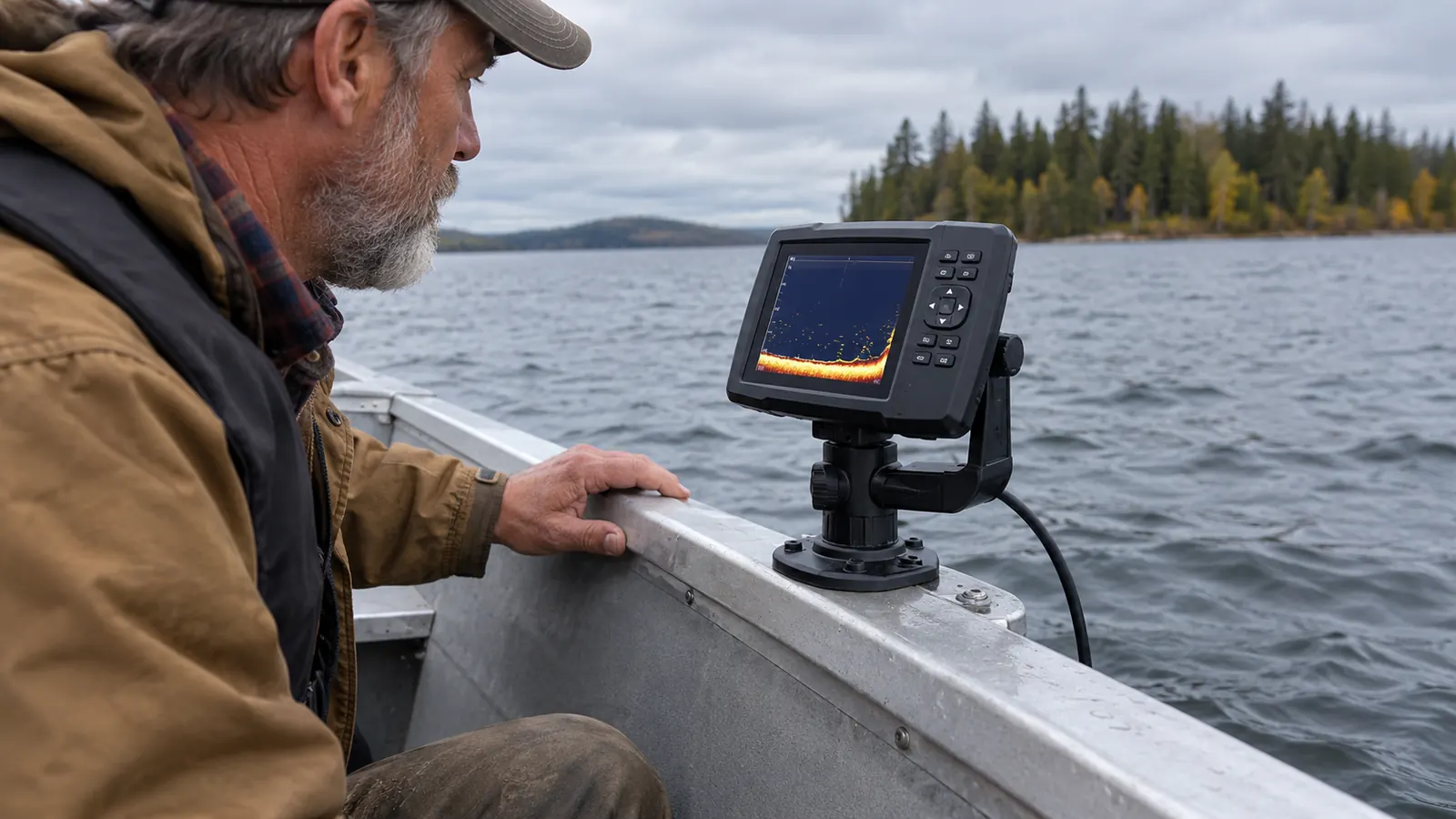
Walleye sit on the clean side of a weed edge, waiting for bait to come out of the cabbage. On the Striker 4, that edge shows up as a distinct line on the screen. I can follow it with the boat and keep my jig in the strike zone the whole way down the flat. Without the unit, I was fishing blind on the inside of the weeds where the fish were not.
You See Fish as Arches, Not Guesses
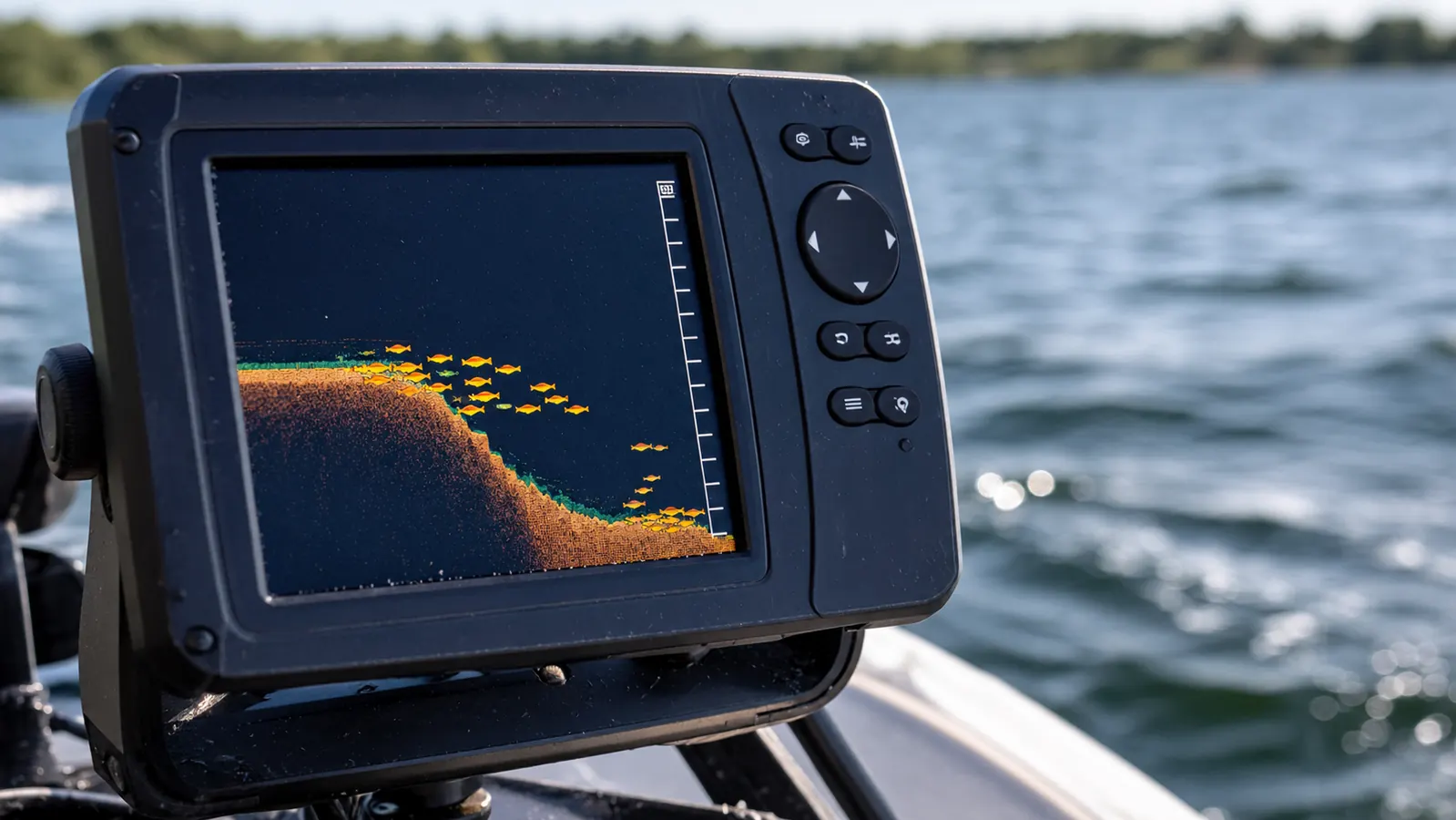
The CHIRP sonar on the Striker 4 marks fish as arches on the screen. When I see a cluster of arches holding tight to the bottom at 20 feet, I know they are walleye or perch, and I can drop a jig right on them. It turns a blind drift into a targeted pass. I caught more fish this season by fishing the arches I could see than I ever did by fishing the water I hoped held fish.
The GPS Marks Your Spots So You Can Come Back
The Striker 4 has GPS, and that is the feature I use more than any other. When I catch a limit on a break, I save the waypoint. When I mark a school on a hump, I save the waypoint. Next trip, I idle right back to the same spot instead of searching for it with the trolling motor. I have a dozen waypoints on my home lake now, and every one of them is a place that produced fish.
It Reads Water Temperature, and Walleye Care About That
Walleye move with water temperature. In early spring they are on the shallow flats when the water hits the mid 40s, and they slide out to the deep breaks as it warms. The Striker 4 shows surface temp on the screen, so I know when to make the move instead of guessing. It told me the water was 48 degrees on opening week, and the fish were exactly where the temperature said they would be.
The Flasher Mode Works Through the Ice
When the lake froze over, I did not put the Striker 4 away. It has a flasher mode, and I used it at first ice for perch and walleye. Same unit, same transducer, and it showed me my jig and the fish on the same screen. That is a lot of value from one small piece of gear.
The Screen Is Readable in Direct Sun
I fish a lot of bright days on open water, and I was worried a 3.5 inch screen would wash out. It does not. Viewed straight on, the display is clear enough to read the bottom and the arches, though at midday I still shade it with a hand. It is a small screen, so you have to look at it directly, but for the price it is remarkably easy to read in the sun.
It Is Simple Enough to Use Without a Manual
I am not a man who reads manuals. The Striker 4 has a menu that makes sense, and I had the basics figured out in one afternoon on the water. Set the gain, watch the bottom, save a waypoint when you catch fish. That is the whole job, and the unit does not bury it under menus. My wife Karen used it to find a school of perch on our first trip out together, and she had never touched a fish finder before.
It Keeps You on the Depth You Meant to Fish
Before I had the Striker 4, I would start a drift at 18 feet and end up in 12 without knowing it. Now I watch the depth readout and steer to stay on the break. That sounds small, but staying on the right depth is half of walleye fishing. The unit keeps me honest, and my catch rate went up because I stopped drifting off the fish.
It Pays for Itself in Saved Time on the Water
The Striker 4 does not catch the fish. It stops you from wasting hours on water that does not hold them. I used to spend the first hour of every trip searching. Now I go straight to a waypoint, check the screen, and start fishing. Over a season, that is dozens of hours back in my day, and it is the reason I would buy the same unit again tomorrow.
What I'd Skip
If you fish mostly from a kayak or a canoe and you never mark spots, the GPS on the Striker 4 will not do much for you, and the 3.5 inch screen is small enough that you will find yourself leaning forward to read it. If you want side imaging to scan wide water without driving over it, this is not the unit for that. The Striker 4 is a traditional 2D sonar with GPS, and it is very good at that job. It is not a replacement for a bigger, more expensive unit, and I would not pretend otherwise.
I caught more fish this season by fishing the arches I could see than I ever did by fishing the water I hoped held fish.
Find More Walleye Next Trip
The Garmin Striker 4 is the most useful piece of gear I added to my boat this year. If you fish walleye on lakes, it will show you what you have been missing.
Amazon Check Today's Price on Amazon →