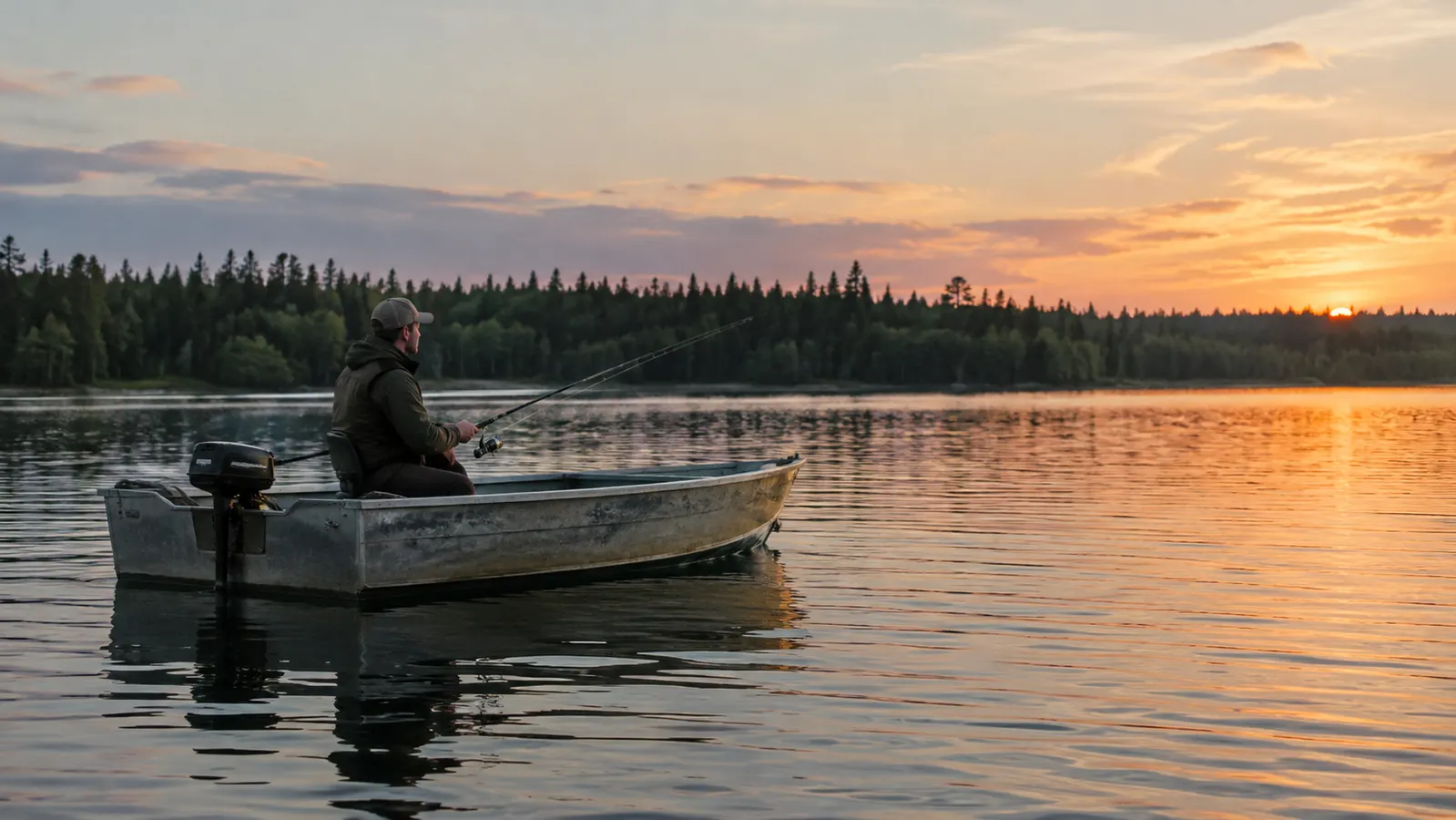
Walleye will eat a bait that is presented wrong, but they do it a lot less often than people hope. On the lakes around Brainerd, most evenings, the difference between a decent catch and a quiet ride home comes down to how the rod is rigged before the bait ever hits the water. I fish from a 16-foot aluminum boat, mostly in the evenings, and I have spent this entire open-water season using the OKUMA Voyager travel kit for this job. It stays behind the seat of my 2013 F-150, rigged and ready, so a calm evening can turn into a walleye stop without driving home first.
This guide is the setup I actually use, not a list of what looks good in a catalog. It covers fresh line, the two rigs I trust most, and the drag setting that keeps 8 lb mono from breaking when a fish makes a hard run. The first rig is a casting jig for the evening bite. The second is a live bait rig for slow trolling when the fish are scattered. Neither one is fancy, and once you have tied them a couple of times, the whole setup takes about 15 minutes from spool to first cast.
A quick note on the gear before the steps. The OKUMA Voyager is a multi-piece travel rod and reel that breaks down into a travel case, which is why it can live behind my seat without getting banged up. The reel is smooth enough for walleye and bass, and a big pike in July reminded me it feels light for that kind of fish. Everything below is based on one full season with this exact combo, May through October.
The kit that stays rigged behind your seat
The OKUMA Voyager is the spinning combo I kept ready all season. It rides in the travel case behind my seat, spooled and rigged, so the next calm evening is a fishing evening. See today's price on Amazon.
Amazon Check Today's Price on Amazon →Step 1: Spool the Reel with Fresh 8 lb Monofilament
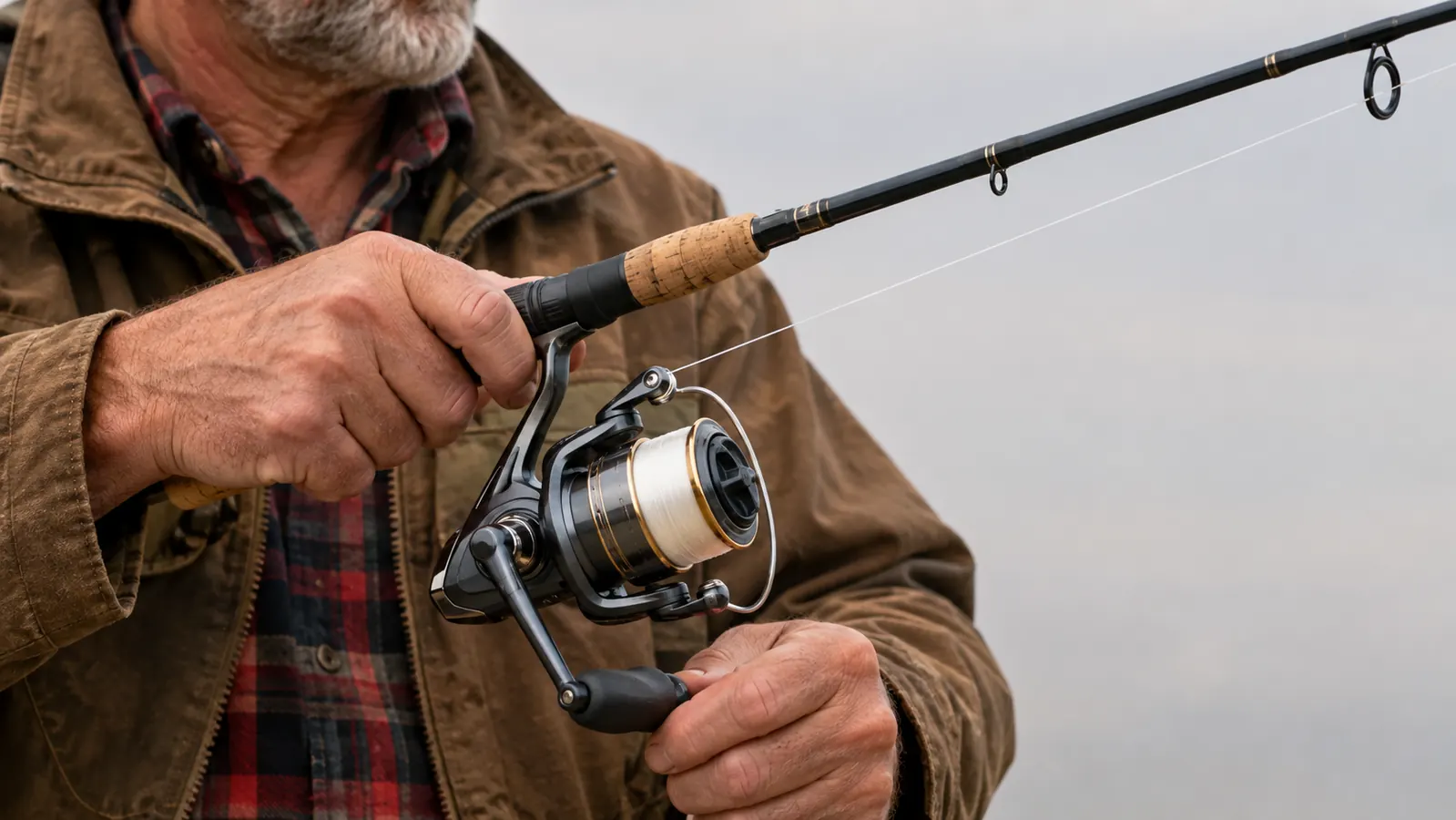
I spool the OKUMA Voyager with 8 lb monofilament, and that is the line I would recommend for it. For walleye on a spinning combo this size, 8 lb mono is the sweet spot. It casts light jigs well, it stretches enough to keep a hooked fish from throwing the bait, and it is cheap enough that you can replace it without thinking twice. I fished the Voyager from May through October this year and never once wished for a heavier line.
If you are spooling from scratch, do it right the first time. Tie an arbor knot around the reel spool, then run the line through a folded towel or have a helper hold a pencil through the filler spool. The point is tension. Line that goes on loose will come off in loops, and loops are how you lose a fish at dusk. Keep steady pressure with your fingers as the line fills, and stop about an eighth of an inch below the lip of the spool.
Mono picks up memory from sitting in a travel case, especially in a truck that sits in the sun. If the line looks coiled or has a lot of set in it, strip it off and put on fresh 8 lb. A spool of good mono costs less than the fuel for one evening trip, and fresh line is the cheapest insurance in walleye fishing. I checked mine before every trip this season and only had to replace it once.
Step 2: Tie a Casting Jig for the Evening Bite
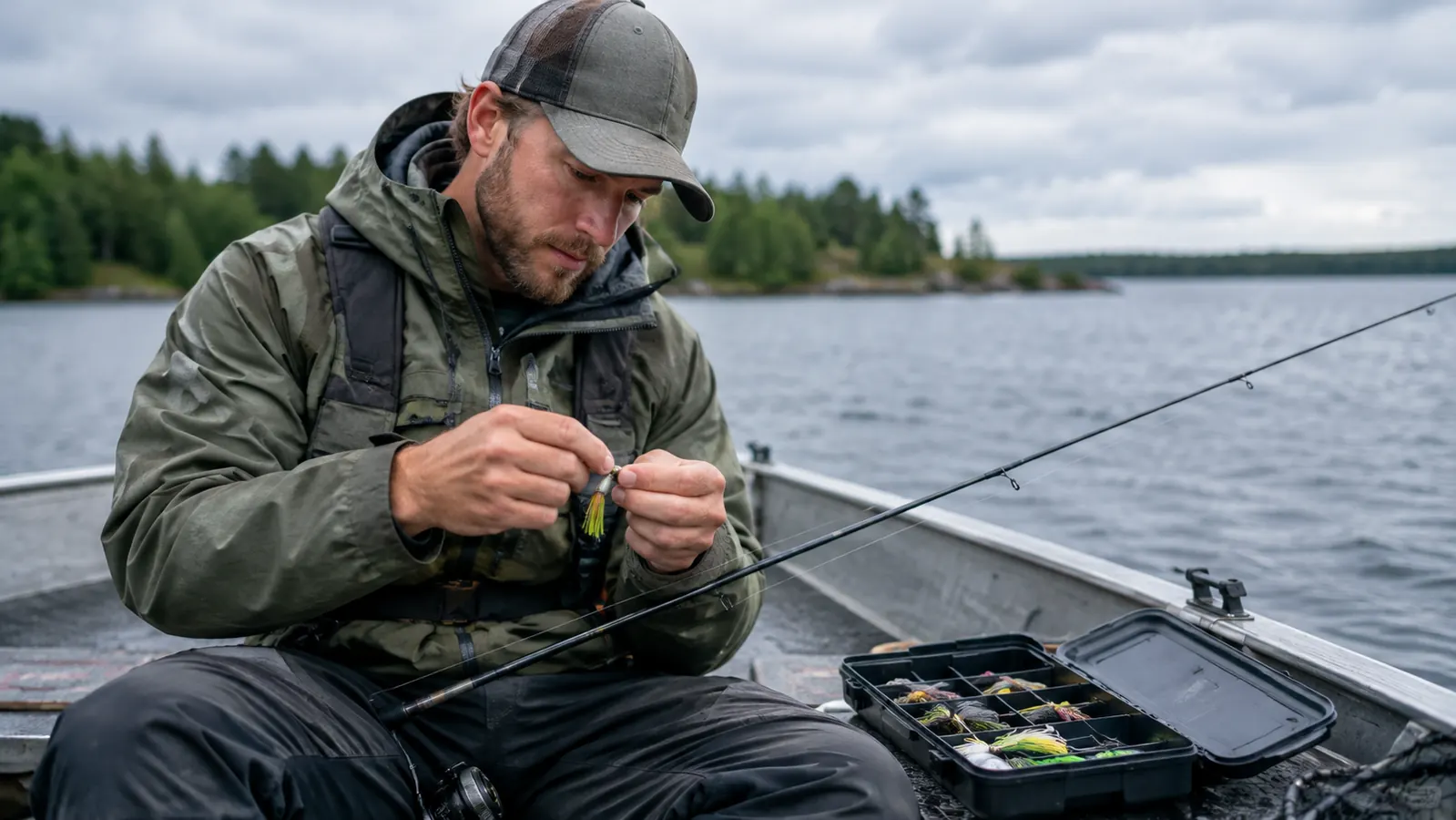
The first rig I put on the Voyager is a plain jig, and it is the one I reach for most evenings. On our lake I use a 1/8 ounce head when the water is calm, and I step up to 1/4 ounce when the wind is up or I want to fish deeper. The rod handles both weights without feeling tip-heavy, which is one of the reasons this combo works so well for walleye. You can tip the jig with a minnow, a leech, or a paddle tail plastic, and all three will catch fish on the right evening.
Tie the jig on with an improved clinch knot, and wet the line before you cinch it. Run the line through the eye of the jig, wrap it five or six times around the standing line, pass the tag end through the loop above the eye, then back through the big loop, and pull it snug. A dry knot on mono can slip under pressure. Wetting it lets the wraps seat properly, and a properly seated knot on 8 lb mono is stronger than the line itself. Trim the tag end close, but not so close that the knot can work loose.
Work the jig slow. Cast it out at an angle to the wind, let it sink until you feel the bottom, then lift the rod tip and reel in the slack. The bite is often soft, so keep the line fairly tight and set the hook on any tick that feels different from the bottom. I caught more walleye this season on a slow jig retrieve than on anything else, especially in the last hour of light. If the fish are short-striking, downsize the jig and tip it with a smaller minnow.
Step 3: Build a Live Bait Rig for Slow Trolling
The second rig I keep ready is a live bait rig for slow trolling, and it is the one that catches fish when they are scattered instead of stacked on a spot. It is simple to build. Slide a walking sinker on the main line, then a small bead, then tie on a swivel. Below the swivel, run a leader of 8 lb mono about three feet long with a single hook on the end. The sinker rides on the bottom, and the bait floats up just above it, right in the zone where walleye feed.
I use a 3/8 ounce walking sinker for most trolling, and I go heavier when the wind pushes the boat faster than I want. The bead protects the knot at the swivel, and the swivel keeps the bait from spinning the line and putting twists in it. Tie the swivel to the main line with a palomar knot, and tie the hook on the leader with an improved clinch. Hook a minnow through the lips, or a leech through the sucker end, and the rig is ready for the water.
Troll just fast enough to keep the boat moving against the wind, which on a 16-foot aluminum boat is often barely above idle. Let out 40 to 60 feet of line, keep the rod tip low, and hold the rod in your hand so you feel the bite. Walleye often pick up a live bait rig gently. When the line ticks or the rod tip bounces, give it a second, then set the hook. Most of the time the fish has the bait and is turning with it, so a patient hook set lands more fish than a fast one.
Step 4: Set the Drag and Keep Line Twist Out
The drag on the OKUMA Voyager is smooth, smooth enough that I never lost a walleye to a hard run this season, though it feels light on a big pike. But a smooth drag only helps if it is set right. I set mine so the line pulls out at about a third of the breaking strength of 8 lb mono. With the rod at 45 degrees, the line should come off the spool with a steady pull but stop when you ease up. That setting lets a big fish take line without snapping the mono, and it still lets you turn a fish's head when you need to.
Line twist is the other thing that ruins an evening. It happens when you reel against a spinning bait or close the bail by turning the handle. Always close the bail by hand. To check for twist, let out a few yards of line with a jig attached and watch whether it coils as it hangs. If it does, let the jig spin freely in the water for a minute to work the twist out. A twisted line casts poorly and is the reason most people blame the rod when the rod was never the problem.
The swivel on the live bait rig handles most of the twist. On the jig rig there is no swivel, so a few twists here and there are normal. Just check the line before you tie on a fresh jig, and you will never spend a calm evening picking a nest out of the spool. I also loosen the drag a touch when I store the Voyager in the travel case, so the spool is not sitting under tension all week.
Step 5: Rig It the Night Before and Keep It Ready
The biggest advantage of the Voyager is that it lives behind the seat of my truck, so the rigging happens at home, not at the lake in the dark. I rig the live bait rig the night before, leave the hook tied on, and stow the rod in the travel case. The jig rig takes two minutes to tie at the boat, so I leave that for the water. When Karen wants to go out for an evening, the whole process is grab the case, grab the tackle tray, and go.
Before I pull into the access, I run the same short check every time. I pull line off the reel and feel it for nicks, wet the knot and cinch it, and test the drag with one hard pull. Then I set the rod in the boat with the jig box within reach. The whole check takes less time than it takes Karen to get her jacket on, and it has saved me more than one frustrating evening. It is the difference between fishing and untangling.
When the trip is over, I rinse the reel seat and the guides with fresh water, wipe the rod down, and put it back in the travel case behind the seat. That is the whole routine. Rig it once, check it each time, and the setup is ready for every calm evening that comes along from May through October. I have used this combo all season, and it has not let me down yet.
What Else Helps
A few small things make the rigs above easier. A hook sharpener is worth carrying because a dull hook is the quiet reason walleye get off at the boat. A snap swivel is handy when you want to switch between a jig and a crankbait without retying. And a small tackle tray with jig heads, sinkers, beads, and hooks keeps everything within reach on the boat floor. None of these cost much, and they all save time on the water.
One more thing: check the line after a trip, not just before. The travel case protects the rod well, but mono can still pick up nicks from the guides or from tying knots. If a section feels rough, strip it off and retie. The OKUMA Voyager is an easy combo to maintain, and a clean reel with fresh line is the whole difference between a rig that works and a rig that just takes up space behind the seat. I also keep a spare spool of 8 lb mono in the boat, which sounds obvious but is easy to forget.
If you fish the same lakes I do, keep the rigs simple and the line fresh. Walleye fishing does not need a dozen setups. It needs one rod that you trust, two rigs that you can tie in the dark, and a drag that does what you ask it to do. The Voyager gives me all three, and that is why it stays in my truck from May through October.
The same knot I tied in May was still catching fish in October, and I never lost a walleye to a failed knot.
Set it up tonight, fish tomorrow
Walk through the five steps above, keep the kit behind your seat, and the next calm evening is a fishing evening. The OKUMA Voyager has been my go-to all season. Check today's price on Amazon.
Amazon Check Today's Price on Amazon →