
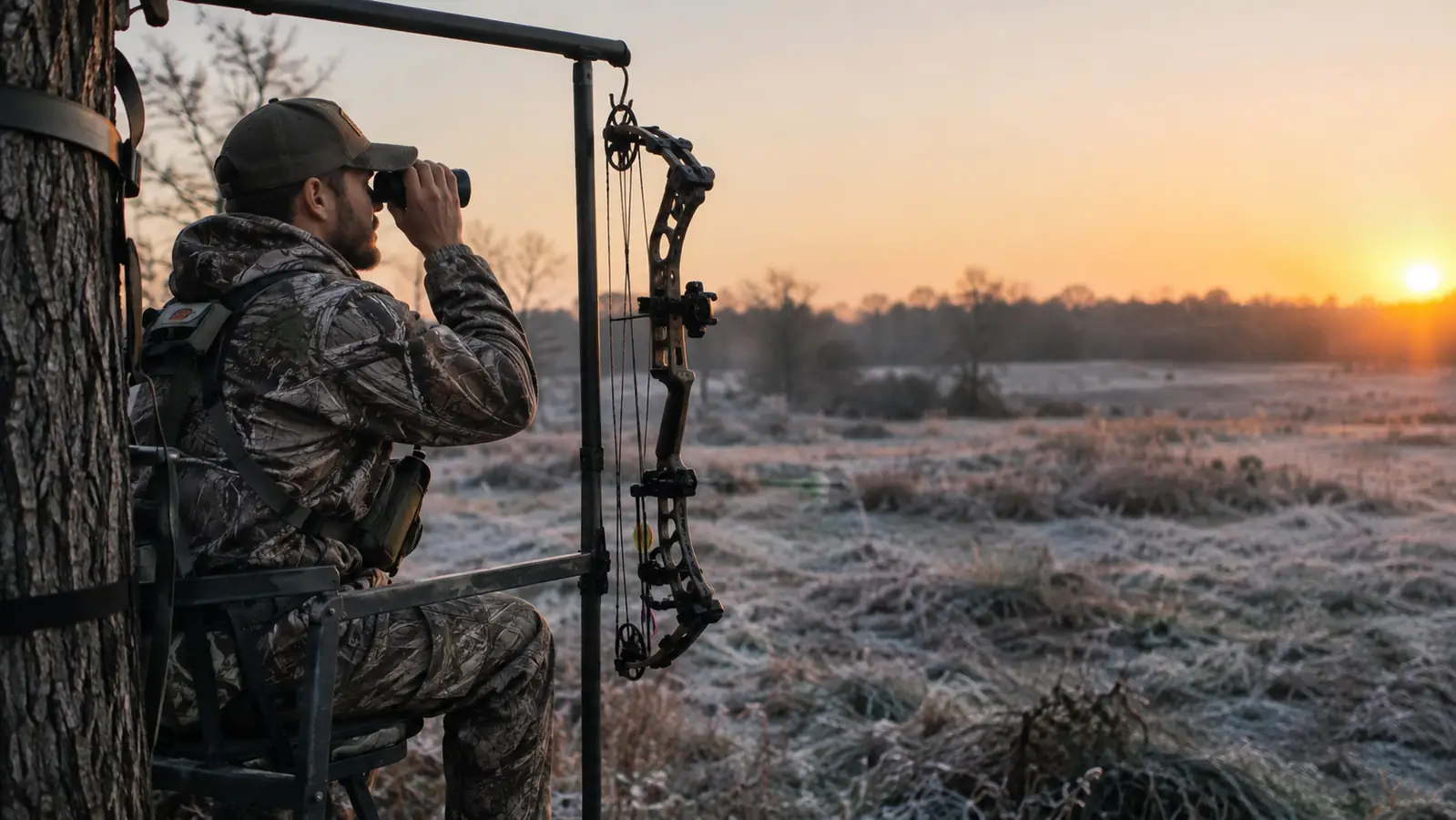
I have hunted deer for about 40 years, and for most of them I judged distance the old way. I picked a tree, memorized the walk to it, and hoped the buck would stand where I thought he would. That works fine until a deer steps out at 38 yards instead of the 25 in your head, and you are doing arithmetic with an arrow already on the string. That miss was not the deer's fault. It was mine, and I knew it. That evening I sat in the truck and did the math again. It did not get better.
Last season I carried a TIDEWE rangefinder for the first time. I had never owned a rangefinder before this one. I am a slow adopter. It took me 40 years to put one on a lanyard. It rode on a lanyard from archery season through late season, and it spent the off-season on the passenger seat of my 2013 F-150. It changed how I set up, how I practiced, and how I shot. The walk to the stand got shorter, the sits got quieter, and the shots got simpler. Here are ten reasons it earns a spot in any bowhunter's pack.
Stop Guessing the Yardage
A full season with a TIDEWE rangefinder took the guesswork out of every sit. Check today's price and see why it stayed on my lanyard.
Amazon Check Today's Price on Amazon →You stop doing the math in your head
The old way is simple: pick a landmark, guess the yards, and hope the buck walks past it. The problem is that a deer does not care about your landmark. He stops where he wants, and he usually stops somewhere you did not measure. With a rangefinder in hand, I ranged the scrape line, the food plot edge, and the trail crossing before dark. When a buck showed up, I already knew the distance. No arithmetic, no doubt, no rush. I have missed deer before by guessing. I do not plan to again.
Angle compensation fixes steep ladder stand shots
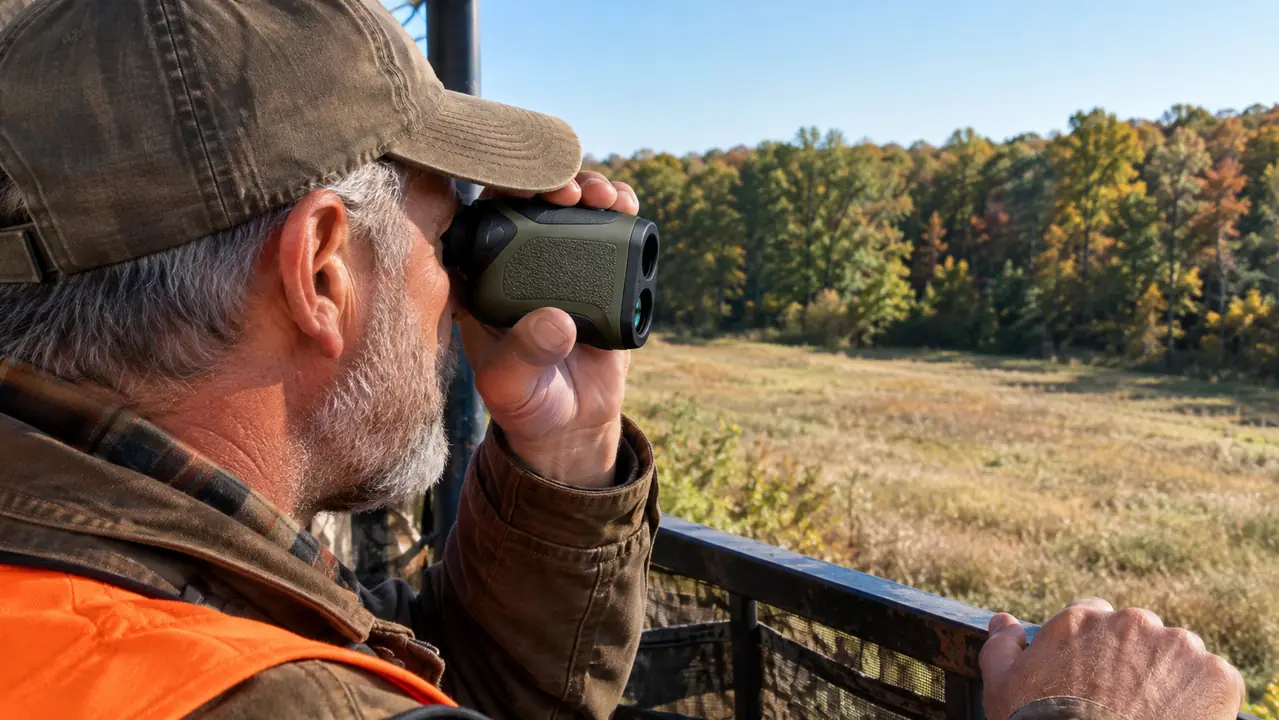
My ladder stand sits about 15 feet up, and nearly every shot from it is downhill. A deer at the food plot edge might be 32 yards away measured flat, but the true shot distance is shorter, and with a bow that difference is the difference between a clean hit and a marginal one. The TIDEWE accounts for the angle, so the number on the screen is the distance the arrow actually travels. That alone earned it a spot on my lanyard.
It reads deer out to 200 yards, which is more than a bow needs
I ranged deer reliably out to roughly 200 yards with the TIDEWE, and big reflective targets much farther than that. For bowhunting I never need more than about 40. That margin means I never wonder whether the reading is honest. It is, and then some. A bowhunter does not need a long-range unit, but the headroom is nice when I glass across a picked field before the November rifle season opens. For most bowhunters, a unit that nails the distances that matter is worth more than one that reaches across a county.
Rechargeable, and one charge lasted me weeks
I charged the TIDEWE about four times all season, from archery through late season. No coin cells to dig out of a pack, no dead unit on a cold November sit. I topped it off when I remembered to, and it was always ready. I never carried a spare battery, and I never needed one. That kind of reliability is easy to take for granted until you have owned gear that quits at the wrong moment.
Light enough that you forget it is on the lanyard
A rangefinder that weighs half a pound more than it should ends up in the truck, and a rangefinder that stays in the truck is useless. This one hung around my neck through the walk in, the sit, and the walk out, and I never once thought about the weight. That is the highest praise I can give any piece of hunting gear. If a tool disappears into the routine, it is doing its job. Weight is the thing every hunter notices after the second hour on a stand.
Buttons work with thin gloves on
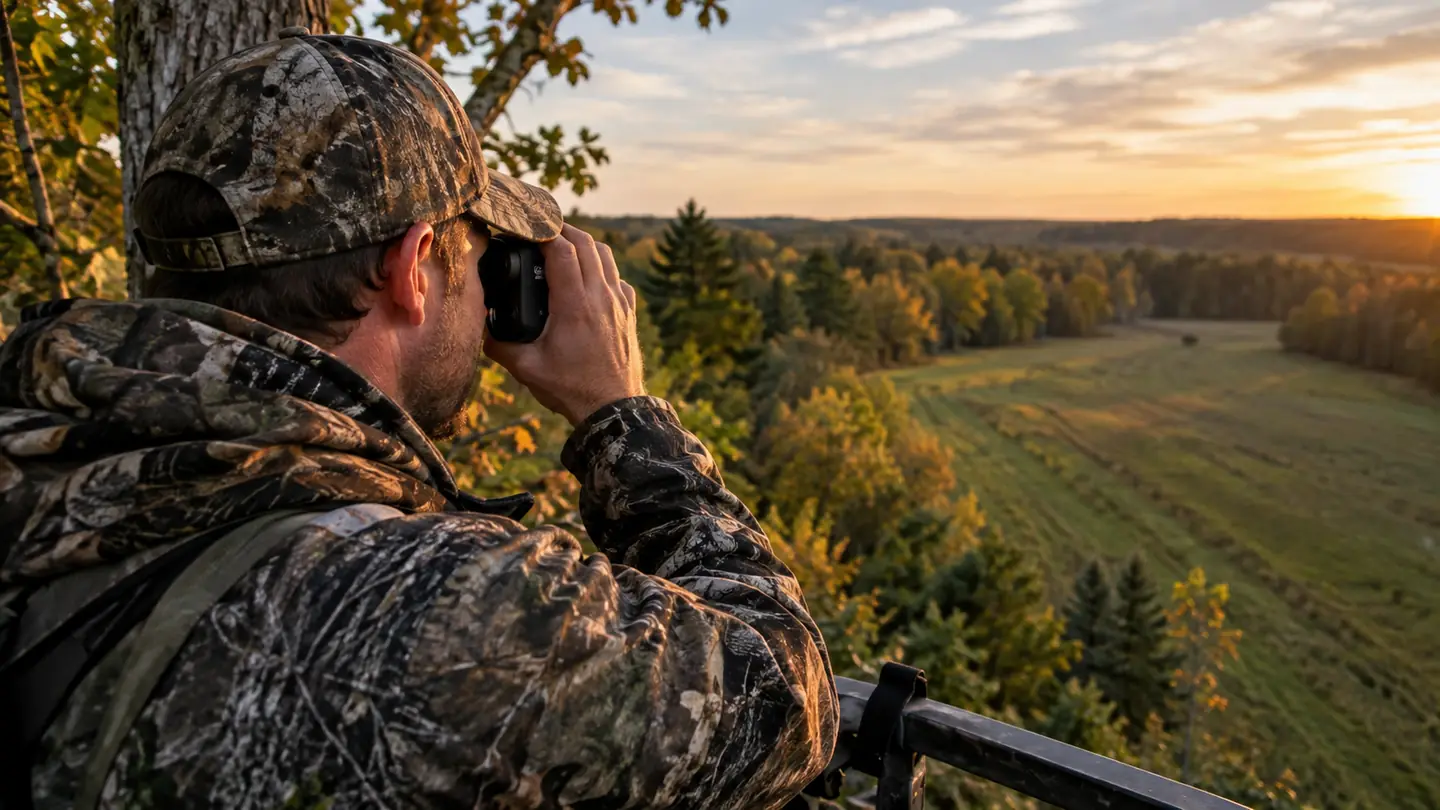
Opening weekend was cold enough for gloves, and the buttons still worked with a thin pair on. With heavy mittens they get fiddly, so I switched to a lighter pair once I was on the stand. That is a fair trade for a tool I use a handful of times each sit. I would rather have buttons I can feel than a hand I cannot move. Plan for it and it will not cost you a shot.
You set up where the deer actually are
Before, I picked stand locations by feel and hoped the deer agreed with me. Now I range the openings, the trail crossings, and the scrape line from the ground first, and I know what the shot will be before I climb. It turned stand selection from a guess into a measurement. I set up tighter to the trails than I used to, and I stopped wasting sits in spots that looked good on paper but were not. Knowing the distance before you climb is a quiet kind of confidence.
It makes you a steadier shooter
The mental part of archery is real. When I knew the yardage, my release got smoother and I stopped rushing the shot. Confidence is not a replacement for practice, but it is the difference between a clean release and a punched one. Karen noticed I stopped second-guessing myself on the walk back to the truck. That is worth something on its own. A calm shooter is a better shooter, full stop.
You verify practice shots, not just hunting shots
I lased the distance to my target bag in the yard and found out I had been practicing at 31 yards instead of the 30 I assumed. Little corrections like that add up over a summer of practice. If you practice at a known distance, you shoot at a known distance when it counts. The rangefinder made my practice honest, and honest practice is what shows up in the stand.
A full season with zero failures
I bought the TIDEWE before last deer season and used it from archery through late season. It read every time I pressed the button, held its charge, and handled the rain and cold of a Minnesota fall. I cannot ask for more than that. It is back on my lanyard this year, and I have no plans to hunt without it. That is the short version of why I trust it.
What I'd Skip
If you only ever shoot from one fixed blind at a known distance, you already have your yardage memorized and a rangefinder is a nice-to-have, not a need. The buttons are also fiddly with heavy mittens, so if you refuse to shoot in thin gloves, that will annoy you. And a rifle hunter shooting across a big picked field would want more reach than this unit's honest 200 yards on deer. For a bowhunter, none of those are deal breakers. For me it was the right tool, and I would buy it again without thinking twice. Every tool has a job, and this one knows its job.
Four charges carried me through a full season, archery to late season, and the distance on the screen was always honest.
Set Up Where the Deer Actually Are
Measured yardage beats a good guess, every sit. The TIDEWE proved that over a full season, and I would not hunt without it now. Check today's price on Amazon.
Amazon Check Today's Price on Amazon →