
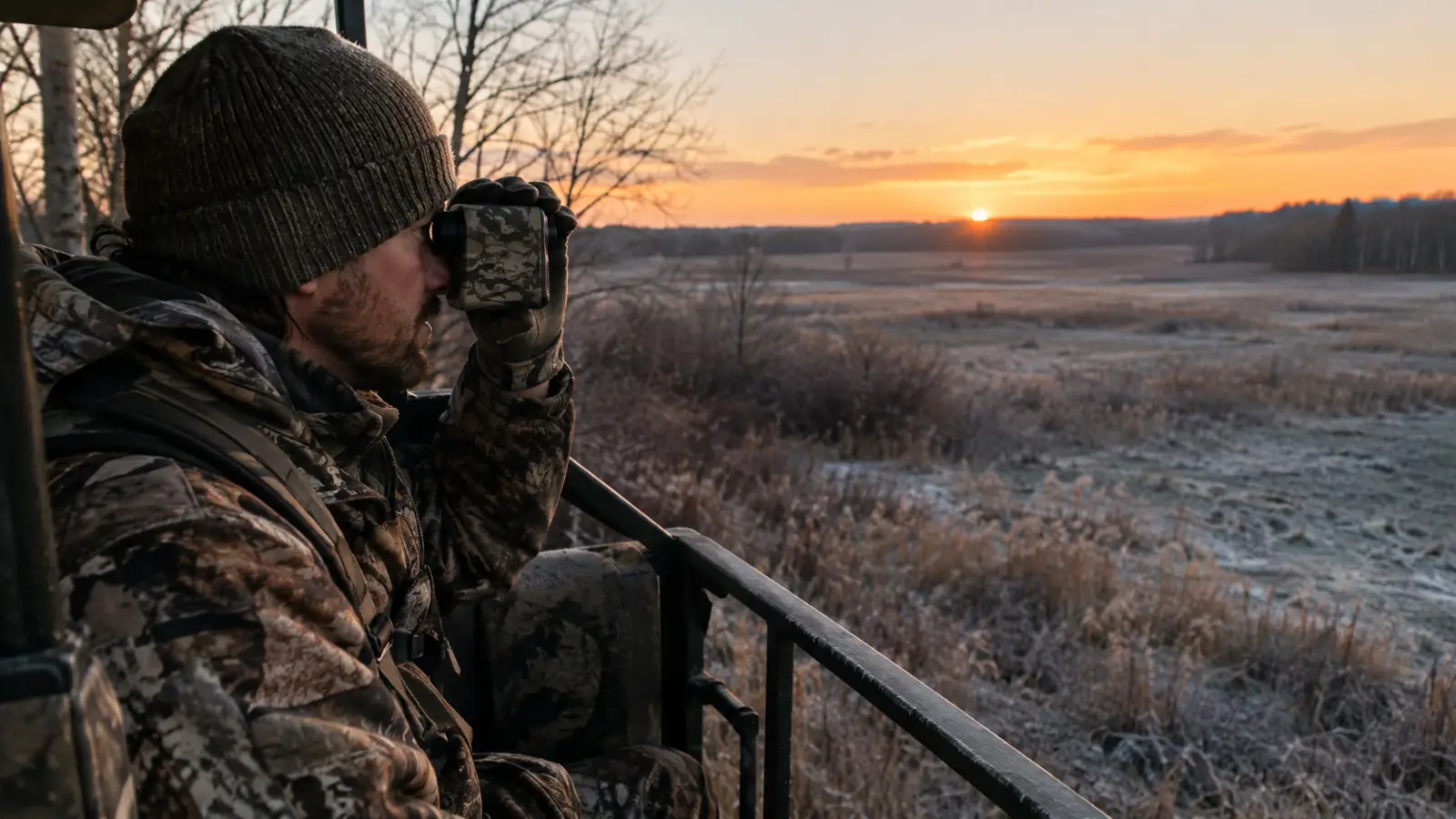
I have hunted deer for about forty years, and for most of that time I guessed the yardage. That is not a brag, it is a confession. I would look at a scrape line, decide it was 32 yards, and be off by more than I wanted to be. With a bow, four yards is the difference between a clean shot and a bad one. So last fall, before archery season, I bought a TIDEWE rangefinder. This is how it held up over a full season from a ladder stand, archery opener through the end of late season.
The honest reason I finally bought one is a specific morning. A buck stepped out on the food plot at last light, and I had maybe ninety seconds of light left. I knew he was inside 40 yards. Inside 30? I did not know. I drew, held, and let down because I could not trust my guess. He walked off into the treeline. On the drive home I did the math on how many deer I had misjudged over the years. It was not a small number. I ordered the TIDEWE that night. I did not want to lose another deer to a number I could have measured.
The Quick Verdict
A rechargeable rangefinder that reads deer out to 200 yards, corrects for the angle from a ladder stand, and went a full season on four charges. If you have been guessing yardage, the TIDEWE fixes it.
Amazon Check Today's Price →Stop Guessing the Yardage
I used the TIDEWE from archery opener through the end of late season and charged it four times. That is the whole review in one sentence.
Amazon Check Today's Price on Amazon →How I've Used It
I hunt from a ladder stand on a friend's 80 acres outside Brainerd, Minnesota. The stand sits on a field edge with a food plot off the left corner and a scrape line that runs along the treeline. My bow shots out of that stand run 18 to 35 yards. The rifle shots run a little farther, but not much. Almost everything I range is inside 100 yards, which means I am using a small fraction of what the TIDEWE can do.
I used it the way I think most stand hunters do. Before first light I ranged the trail crossing, the scrape line, and the corner of the food plot, so I had numbers in my head before anything moved. When a deer stepped out, I ranged it again and decided whether the shot was inside my number. That is the whole job, and the TIDEWE did it without me thinking about the tool itself. A rangefinder that you can forget about is doing its job right.
I charged it four times from archery opener through the end of late season. Four times in roughly four months of hunting. I never once had it die on me in the stand, and after the first month I stopped thinking about the battery entirely.
What It Does Well
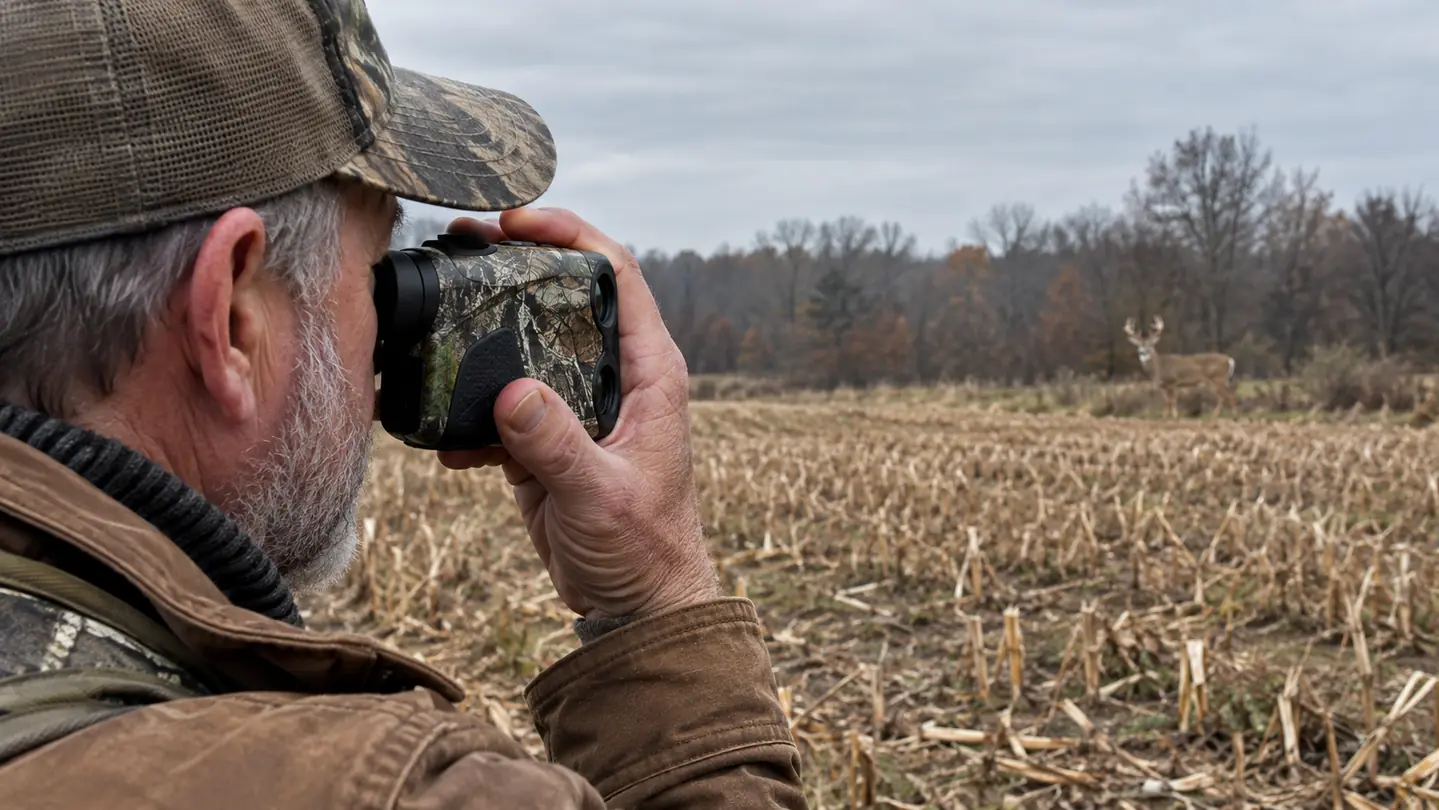
The angle compensation is the feature I did not know I needed. From a ladder stand, your eyes are 18 or 20 feet above the field. A deer that looks like 30 yards on flat ground is closer than that in the horizontal distance that matters for an arrow. The TIDEWE gives you the corrected number, and from a stand, that is the only number that counts. I ranged the same corner from the ground and from the stand, and the difference was enough that I stopped trusting my eye entirely.
It reads deer reliably out to about 200 yards. I pointed it at the grain bins across the field one afternoon and it gave me numbers way out there, but deer are the honest test, and it did not miss a deer inside 200 yards that I put the crosshair on. The reading comes back fast, too, about a second from the button to the number. When a buck is already looking at you, a slow answer is the same as no answer. For my bow, I never need more than 40 yards. That is a five-to-one margin, and it means the rangefinder is never the thing that costs me a shot.
The buttons work with thin gloves. In October, when I wear light gloves on the walk in, I can range a deer without taking a glove off. That matters more than it sounds, because a deer at 31 yards is not going to wait while you sort out your hands. The screen is easy to read in low light, which is when I do almost all of my ranging. The fog test was the one that surprised me. On a damp October morning, fog sits over the food plot until nine, and the field edge disappears into it. The TIDEWE read through that fog better than I expected, because cheap optics and fog do not usually get along. I ranged the trail crossing at 28 yards in fog so thick I could barely see the treeline, and the number held when I checked it again on a clear day.
For the November rifle season, 200 yards is more than enough. My longest shot from that stand is maybe 140 yards across the field, and I can range that corner before the sun is up. I used to pace the distance in my head on the way to the stand. Now I have the number before I climb, and I do not have to think about it again.
Where It Falls Short
Heavy mittens are the problem. In late season, when it is 8 degrees and I am wearing the big mittens, the buttons are fiddly. I ended up pulling a hand out of the mitten to range, which is exactly what you do not want to do in single digits. It is a small thing, but it is the one thing I would change about the design.
The camo body does its job a little too well. I set the TIDEWE down on the stand platform one November morning and had to pat around for it because it blended right into the platform. I found it, but I learned to keep it in the same pocket every time after that. That is a me problem as much as a product problem.
It can range the brush behind the deer. If you point it at a deer standing in heavy cover, you can get a reading off the sapling behind it, and that number will lie to you. I learned to range the open lane first, then wait for the deer to step into it. That is user error more than product error, but it is real and you should know about it.
A rechargeable unit asks you to remember to charge it. I never got caught, because four charges covered the whole season, but it is a habit. I plugged it in the night before a hunt, the same way I charge my phone, and that was enough. If you are the kind of person who forgets to charge things, that is worth knowing about yourself before you buy.
A Full Season on a Handful of Charges
I bought it before archery season, which opens here in September, and I carried it through the November firearms season and into the cold of late season. One full season in the same ladder stand, from the archery opener in September through the November firearms weekend and the last cold sits of late season. Most of my gear has opinions about that kind of stretch. This one did not.
I charged it four times. Once before archery season, once before the November opener, once in December, and once just because I was charging other gear and the habit felt right. It never died in the stand. It never gave me a slow reading because the battery was low. For a rechargeable piece of hunting gear, that is the review that matters.
On archery opener it was still warm enough that I wore a light jacket, and the TIDEWE lived in the chest pocket. I ranged every deer I saw that first week, even the ones at 15 yards, just to build trust in the numbers. By the third sit I stopped ranging the easy ones and only reached for it when the shot was close to my limit. That is exactly when a rangefinder earns its keep.
The last-light buck from the opening of this review showed up again in November, same food plot, same corner. The TIDEWE said 31 yards. I trusted the number, drew, and I did not let down this time. Karen, who does not hunt, said it was the first piece of hunting gear she saw me put away instead of toss in the back of the truck. She is not wrong.
The Alternative I Considered
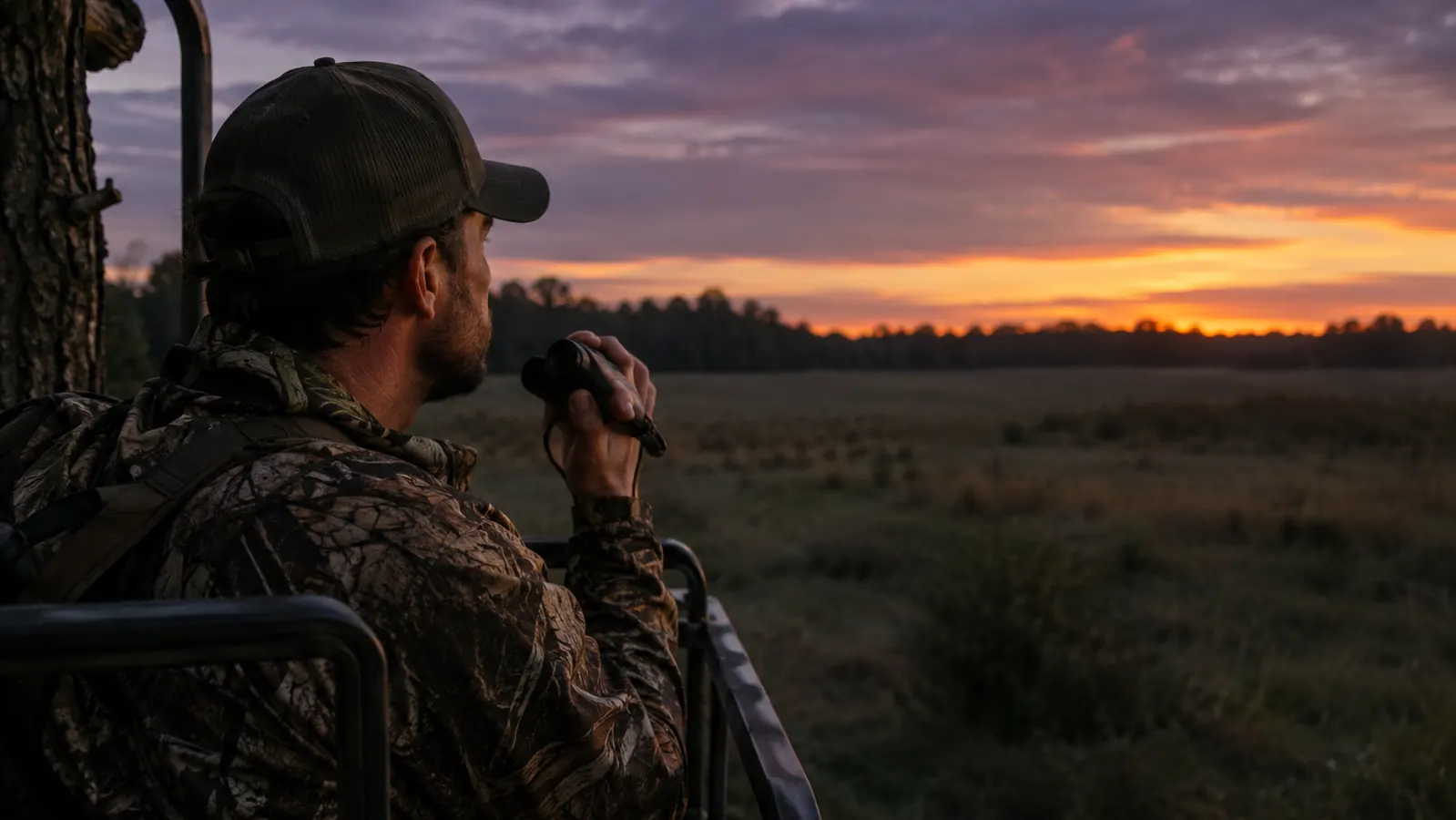
The only real alternative was the thing I had been doing for forty years, which is guessing. I looked at other rangefinders, and I will not pretend they are not nice. But my ceiling with a bow is 40 yards. A rangefinder that reads deer at 200 yards and corrects for angle does everything I need, and the rechargeable battery means I am not buying batteries in October.
I also thought about whether I wanted a unit with more settings. I decided I did not. In a ladder stand, I need one number, the corrected horizontal distance, and I can keep the rest in my head. Extra settings are extra buttons to fumble with mittens on.
If you hunt out west and need to range a buck at 400 yards, you will want a unit with more reach. I will say that plainly. For a whitetail hunter in a ladder stand, the TIDEWE is more than enough. I have not once wished for more, and I have used it in conditions from foggy September mornings to a 6-degree December evening.
What I Liked
- Reads deer reliably out to roughly 200 yards, with big reflective targets much farther
- Angle compensation gives the true horizontal distance from a stand, which is the number that matters for a bow
- One charge lasted weeks; I charged it four times all season
- Buttons work with thin gloves, so I can range without taking a hand out
- Rechargeable, so no hunting for spare batteries in the dark
Where It Falls Short
- Buttons are fiddly with heavy mittens in single-digit cold
- It can range the brush behind a deer in heavy cover if you are not careful
- Camo body blends into a stand platform, easy to set down and lose
- You have to remember to charge it, though four times a season is not much to remember
I charged it four times from archery opener through late season. It never once quit on me in the stand.
Who This Is For
If you hunt from a stand and you have been guessing yardage the way I did, this is for you. If you shoot a bow from any elevation, the angle compensation alone is worth it. If you want a rangefinder you can charge in September and mostly forget until the season ends, this is for you. It is for the hunter who wants a tool that does one job and gets out of the way.
It is also for the hunter who has never owned a rangefinder and does not want to learn a complicated one. I had never owned one before this, and I did not read the manual. I charged it, pointed it at a tree, and that was the whole learning curve. If you can use a pair of binoculars, you can use this.
Who Should Skip It
If you only shoot from a ground blind at 20 yards, you do not need a rangefinder at all, and this will not change that. If you hunt open country where deer get ranged at 300 and 400 yards, you will want more reach. If you want a rangefinder with a ballistic solver and a dozen settings you will never touch, look elsewhere. This is a simple tool that does one job well. For most whitetail hunters, that is the point.
And if you hunt the same ground from the same stands every year, you will probably range everything in the first week and then hardly touch it until the deer show up. That is not a reason to skip it, but it is the truth about how it gets used. Most of the value shows up in the moments you cannot plan for, the buck that steps out where you did not expect one.
One Season, Four Charges, Zero Guesses
If you have been guessing yardage for as long as I have, this is the rangefinder that ends it. It did for me, from archery opener through the last cold sits of late season. One season, four charges, and one buck I finally trusted the number on.
Amazon Check Today's Price on Amazon →