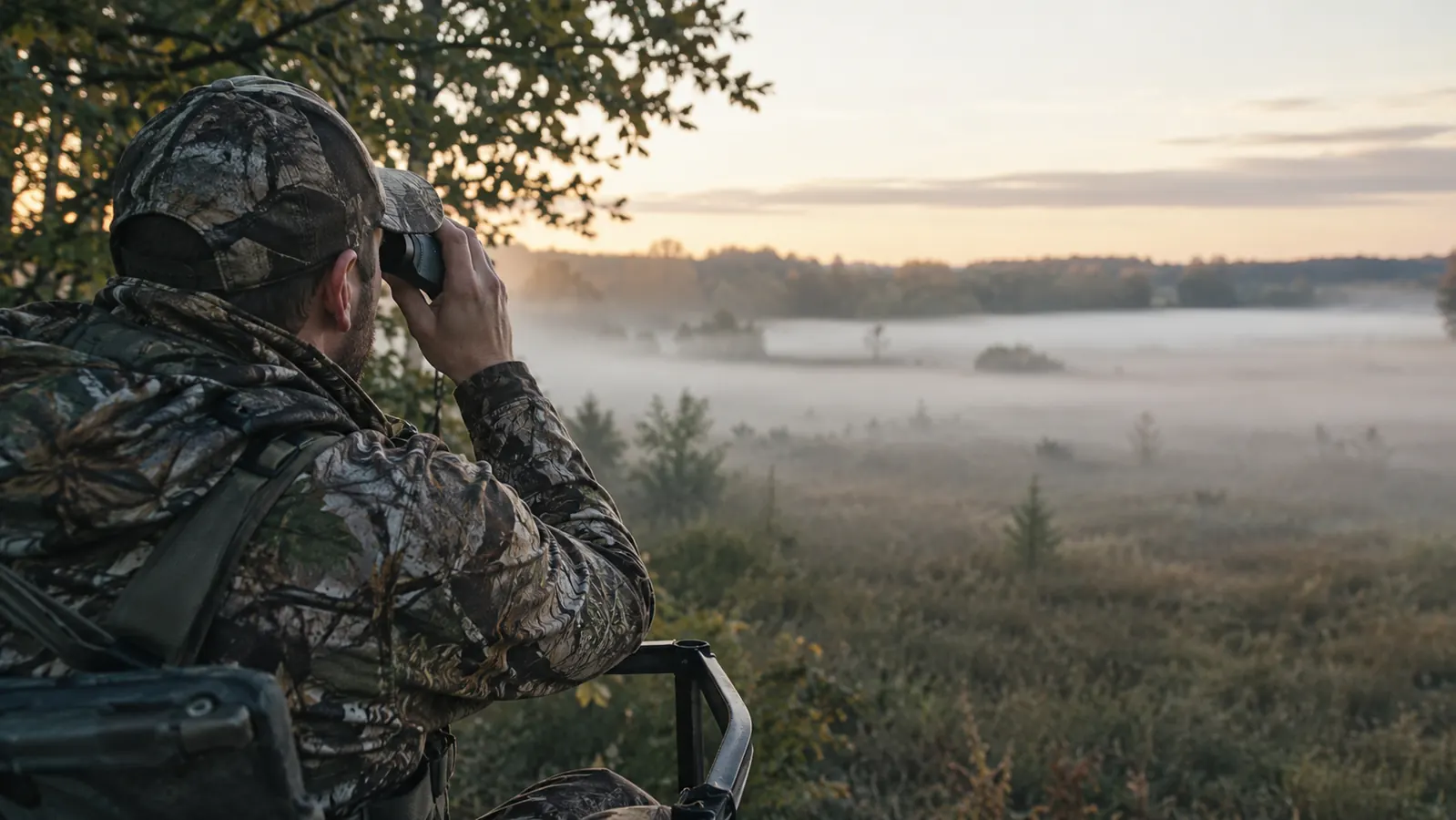
The buck stood at the edge of the food plot, quartering toward me, and I had no idea if he was 28 yards or 38. From my ladder stand on a friend's 80 acres outside Brainerd, that gap is the difference between a clean shot and a miss. I have hunted deer for about 40 years, most of that time with a compound bow in archery season and a rifle in November, and I have guessed at more yardage than I want to count. Last year I finally stopped guessing. I bought a TIDEWE rangefinder before deer season, used it from archery through late season, and the 31-yard shot that used to be a coin flip is now just a shot.
The stand sits about 18 feet up an oak tree, and from that height the distance you see is not the distance your arrow travels. A deer standing 31 yards away on flat ground is closer to 33 yards through the lens when you are shooting downhill. The TIDEWE handles that angle for me, so I can focus on the deer instead of doing geometry in my head.
For years I used the old method: pick a spot, guess, and hope. I missed a good 8-pointer low one November because I aimed for 35 and he was standing at 42. I told myself I needed more practice, but the real problem was that I was aiming at a guess. That is a hard thing to admit after four decades of hunting, but it is true.
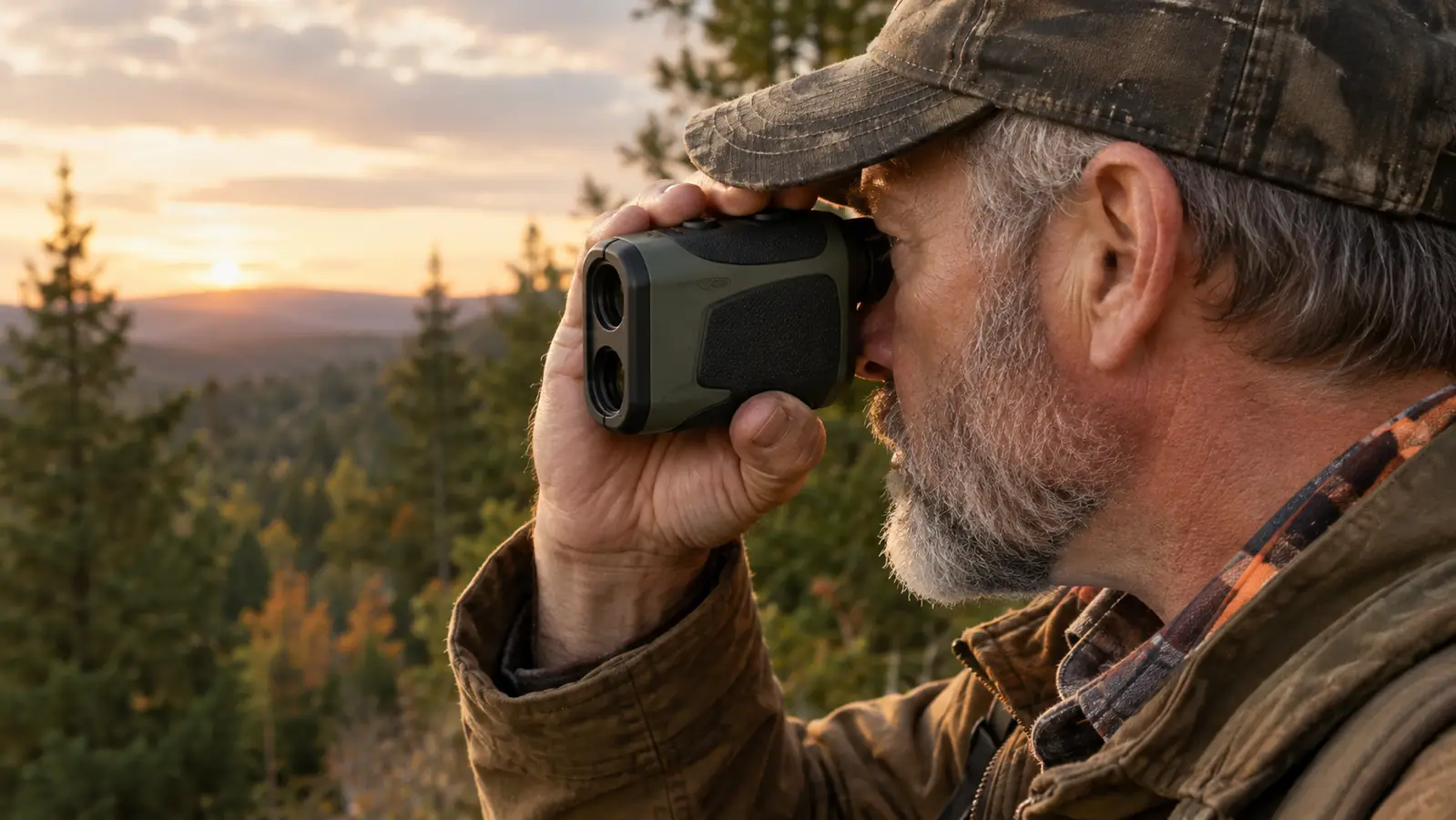
Last season I charged the rangefinder about four times from archery through late season, and it read deer reliably out to roughly 200 yards. For my bow I never need more than about 40, so it had plenty of reach to spare. It also worked on the reflective trail markers and the metal roof of the barn across the field, which tells me the long-range numbers are not just a spec on a box.
I carried it in the chest pocket of my hunting jacket all season, and it stayed put. The rechargeable battery meant I never had to buy a spare battery at the gas station on the way to the stand, and the four charges I mentioned got me through a whole season of archery, rifle, and late season. That matters when you hunt as often as I do.
During rifle season in November I kept it in the same jacket pocket, and it did not slow me down when I needed a quick distance check. I used it less with the rifle because a 40-yard mistake matters less at 150 yards, but it still came out for the walk to and from the stand. Old habits die hard, and this one is a good habit.
Stop Guessing the Yardage on Your Next Shot
The TIDEWE rangefinder I used all season reads deer fast and handles the angle from a ladder stand. Check today's price on Amazon and see if it fits your setup.
Amazon Check Today's Price on Amazon →The buttons are easy to find with thin gloves, which matters in late October when you are trying to range a buck before he moves. With heavy mittens they are fiddly, so I switched to a lighter pair for the last few minutes of shooting light. That is a small tradeoff, and it is the only real complaint I have.
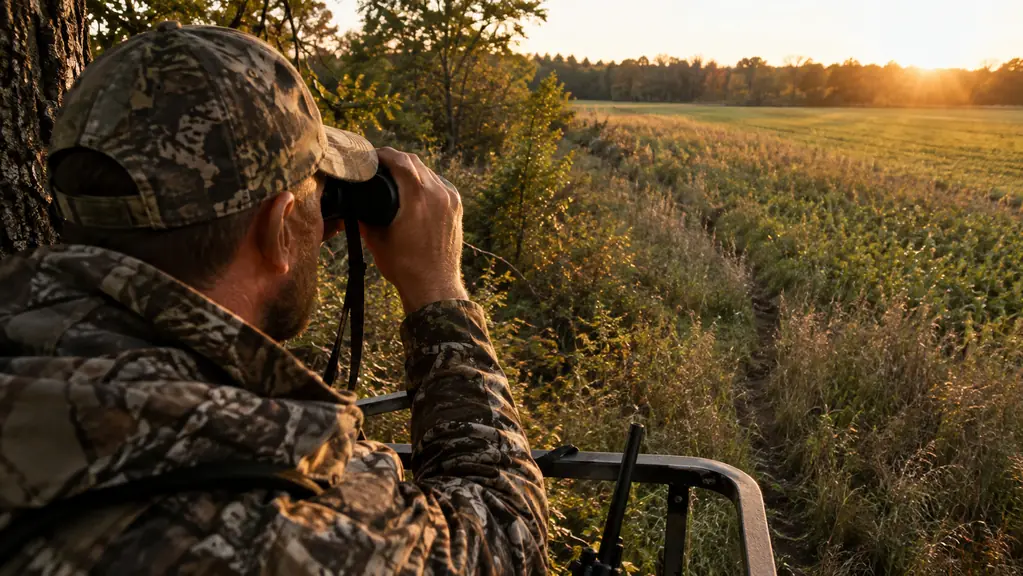
The morning the 31-yard shot finally mattered, I ranged a buck twice to be sure. The TIDEWE read him at 31 yards both times, I settled the pin where the range told me to, and the arrow went where I aimed. It was not a dramatic story. It was just a clean shot, the kind I used to ruin by guessing.
The TIDEWE read the buck at 31 yards, and the arrow went where I aimed. That alone is worth the price of admission.
I have used rangefinders owned by other hunters, but I have never owned one before this. I did not buy the fanciest model on the shelf, and I do not need one. For a bowhunter who hunts from a fixed stand and rarely shoots past 40 yards, the TIDEWE does everything I need without making me feel like I am operating a piece of test equipment.
By late season I stopped ranging every single deer. Once you know what 30 yards looks like from your own stand, the rangefinder becomes a check on your instincts instead of a crutch. That is exactly what I wanted out of it. It made me a better judge of distance, not a worse one.
One thing I did not expect was how much the angle compensation would matter from my stand. I hunt from the same ladder stand most of the season, and once I saw how much the downhill shot changed the number, I stopped trusting my eye for anything past 25 yards. That alone changed how I set up for shots, and it is the reason I will not hunt from an elevated stand without one now.
What I'd Tell You If We Were Sitting at My Kitchen Table
If we were sitting at my kitchen table with coffee, I would tell you this: if you hunt from an elevated stand with a bow, stop guessing. The angle alone is reason enough to own a rangefinder, and the TIDEWE is the one I trusted all season. I would also tell you to practice with it before opening day, because the only way it helps you is if you already know how it behaves in low light. It is not a substitute for practice. It is a tool that takes the guesswork out of the one part of the shot you can actually control.
Make the Shot You Have Already Practiced
If you are still guessing yardage from your stand, this is the fix. See today's price on Amazon and put the TIDEWE to work before your next hunt.
Amazon Check Today's Price on Amazon →