
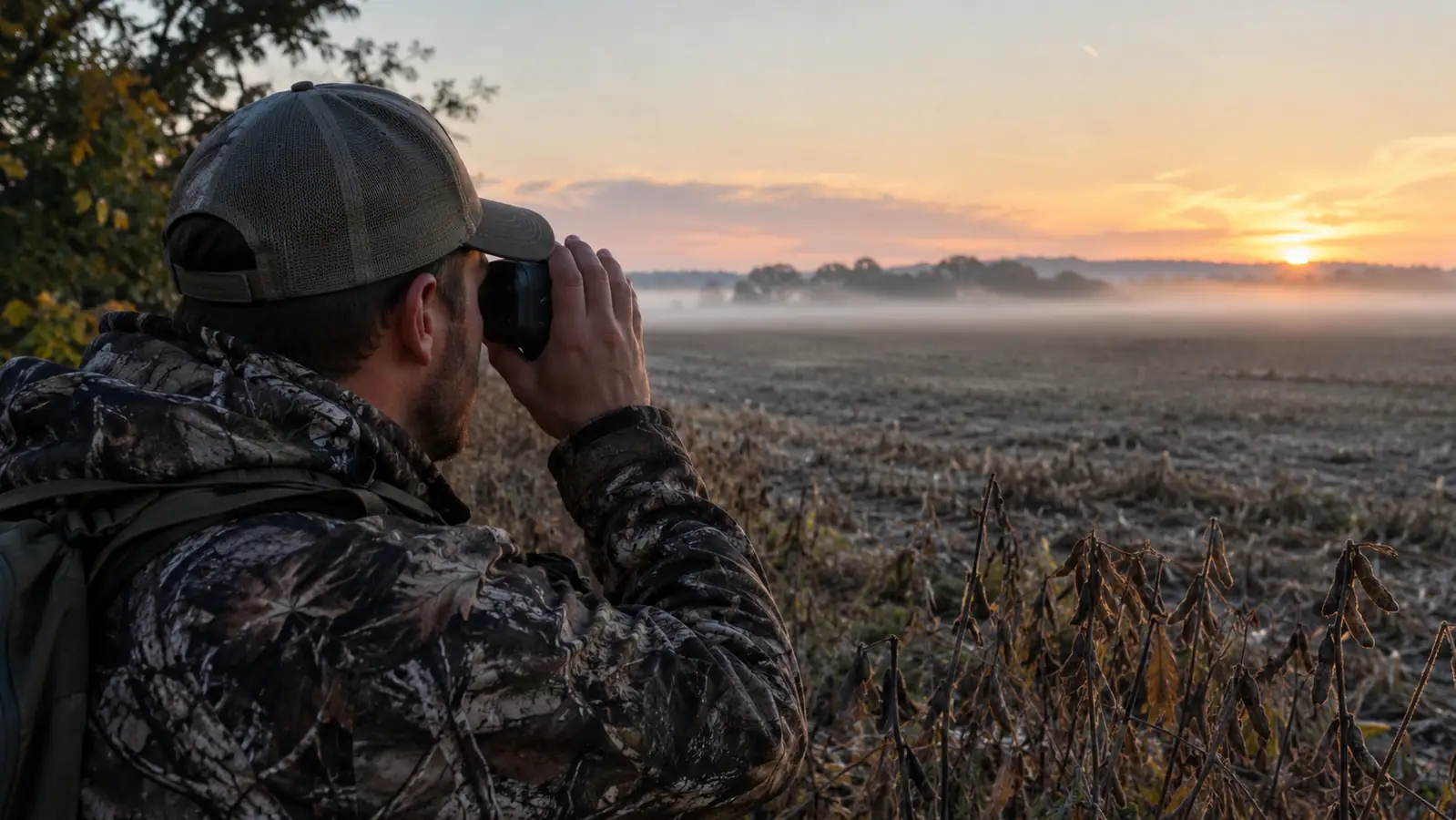
The miss happened one November, years before I owned a rangefinder. A buck was working a scrape line at the edge of the food plot, and I had 45 minutes of good light left. I talked myself into 35 yards, held on his chest, and watched the arrow go under him. He was 42. I knew it the second he bounded off, because I had paced that line the week before and never looked at my notes. That is how I hunted for the better part of 40 years, guessing, and mostly guessing wrong at the worst moment. Last September I finally did something about it and bought the TIDEWE Hunting Rangefinder before the archery opener.
The rangefinder rode in my pack on every sit from the third Saturday in September through the last week of the late season, and I charged it four times all year. When guys at the sporting goods counter ask how it stacks up against the Vortex Crossfire HD 1400, the rangefinder half the hunters in Brainerd seem to carry, I give them a short answer and a long one. The short answer is that the TIDEWE is the better buy for a deer hunter like me. The Vortex has brighter glass and a better warranty, and I will tell you exactly where it earns that. But for the shooting I actually do from a ladder stand, the TIDEWE does everything I need and leaves money in my pocket. I spent a weekend with the Vortex last fall to be sure, and I have not wished for it once since I handed it back.
How I Ran This Comparison
The TIDEWE rode in my pocket all season, and I had a Vortex in hand for one weekend in late October, so the TIDEWE had a head start. The archery opener here in Minnesota is the third Saturday in September, and I was in the ladder stand on a friend's 80 acres that morning. The first thing I checked was the angle compensation, because my stand sits on a low ridge and every shot I take is downhill. The ridge drops maybe 12 feet over the 40 yards to the food plot, which does not sound like much, but it is enough to make a 40 yard shot read like 45 if you range it straight. The TIDEWE gives the horizontal distance instead. The first time I ranged a buck and got the same number I had taped from the stand, I stopped second-guessing it.
I had tried the cheap version of this before, which was pacing off the food plot one afternoon and memorizing the fence posts. That worked for the posts. It fell apart the first time a buck walked between them, because a deer at 38 yards looks exactly like a deer at 45 yards when you are 12 feet up a tree and the light is going. That is the problem the TIDEWE solved, and it is the reason I trust a number over my own eyes. I tested it against things I already knew the distance to, because that is the only honest way to test a rangefinder. The fence post at the corner of the food plot was 47 yards from the stand. The big oak at the far edge was 118. The TIDEWE nailed both on the first try, in fog and in full sun, morning and evening. The fog test is the one that sold me. A rangefinder that works in fog is one you can trust on a damp October morning.
I carried it on cold November sits, and that is where I found the button problem. With thin gloves the buttons work fine. With heavy mittens they are fiddly, and I took the mittens off more than once to range a buck. The worst one was a 12 degree morning in mid-November when a buck came out at 41 yards and I stood there with my mittens off fumbling while he fed. I got the number, but it took too long. With thin gloves, which I wear most of the season, it is a non-issue. That is a small thing, and I mention it because nobody else will. The battery never got close to dying. I charged it four times all season, usually after a week of heavy use, and it sat for weeks at a time without losing much of a charge.
The Vortex came later. I spent one weekend with it, Friday evening and Saturday morning, and ran the same test from the same stand. Friday evening I stuck to targets, the fence post and the oak and the old shed roof across the field. Saturday morning I ranged a deer at the far treeline that I could barely make out without the Vortex. That is where the extra reach lives. I just do not shoot that far. The glass is genuinely better, and I will say that plainly. In the last ten minutes of shooting light the Vortex is brighter and easier to read. It also runs on a CR2 battery you have to buy, and its 1400 yard rating is for reflective targets, not deer. On a deer chest it reads further than the TIDEWE, but not in a way that matters to me, because I would not take a shot past 200 yards from that stand anyway.
| TIDEWE Hunting Rangefinder | Vortex Crossfire HD 1400 | |
|---|---|---|
| Cost to own | Costs far less up front, and the battery is built in | Costs more up front, and you buy CR2 batteries over time |
| Battery | Built-in rechargeable, four charges got me through the whole season | One CR2 battery, easy to swap but another thing to keep in the pack |
| Glass quality | Clear enough to read a deer's chest at 200 yards in decent light | Brighter and crisper, noticeable in the last ten minutes of shooting light |
| Angle compensation | Built in, fixed the downhill math from my ladder stand | Built in too, with line of sight and horizontal distance modes |
| Warranty | Standard limited warranty | VIP lifetime warranty, no receipt needed, and it transfers if you sell it |
| Practical deer range | Read deer reliably to about 200 yards, which is all I need | Reaches further on a deer, but I never shoot past 200 anyway |
| Best for | Everyday deer hunters who want the job done without spending Vortex money | Hunters who want top-shelf glass and a lifetime warranty |
| In the hand | Compact and light, hangs on a lanyard without pulling your head down | Slightly bigger and heavier, feels more substantial |
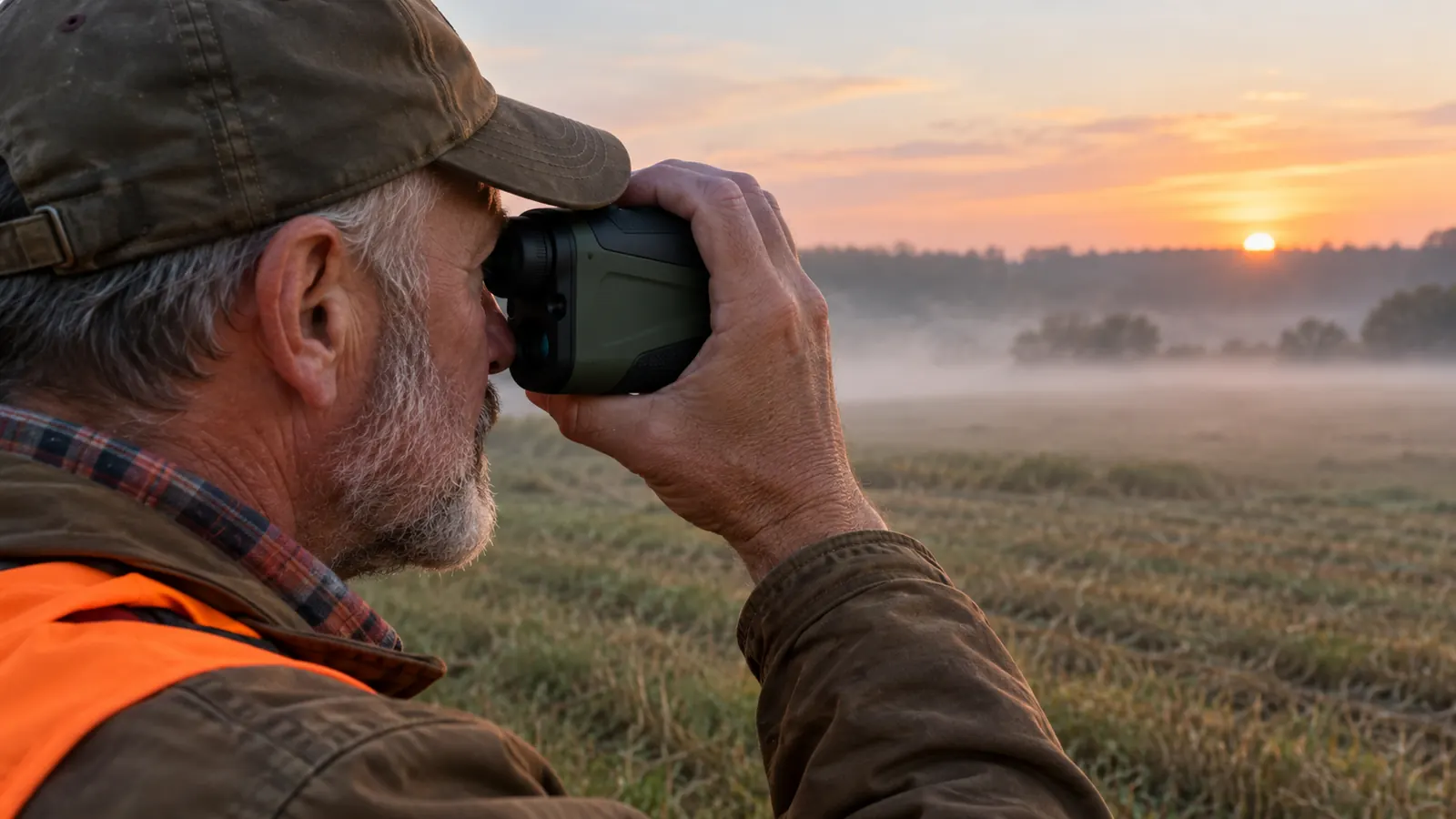
Where TIDEWE Wins
The battery is the first place the TIDEWE wins, and it is the reason I stopped thinking about the rangefinder entirely. I charged it four times in a full season. That covered the archery opener, a week of evening sits in October, the November firearms season, and a few late season sits when the snow was deep enough that I only went out for a couple of hours at a time. There was one evening in late November, 14 degrees with a wind that cut through everything, when I realized I had not charged it in ten days. It still read the buck at 38 yards on the first try. I never once had it die in the stand, and I never carried a spare battery. The Vortex is not a problem in that department, a CR2 lasts a long time. But it is still something you have to remember to buy, and I like not needing to remember. I like plugging the TIDEWE in at the kitchen counter the way I charge my phone, and then forgetting about it for a month.
The second place is the angle compensation, which is the feature I did not know I needed until I had it. I spent years holding low on downhill shots because I was ranging the distance wrong. From a ladder stand the angle fools you as much as the distance does, and the TIDEWE accounts for both. The TIDEWE took that mistake out of the equation. It gives the horizontal distance, which is the number that matters, and it does it without making me switch modes or read a manual. I ranged the same buck on three different evenings last October and got the same reading every time. That consistency is worth more to me than a brighter image in the last ten minutes of light, because a reading you cannot trust is worse than no reading at all. The third place is the price. I will not quote numbers, but the TIDEWE costs a fraction of the Vortex, and for a retired lineman, that difference buys a lot of other gear.
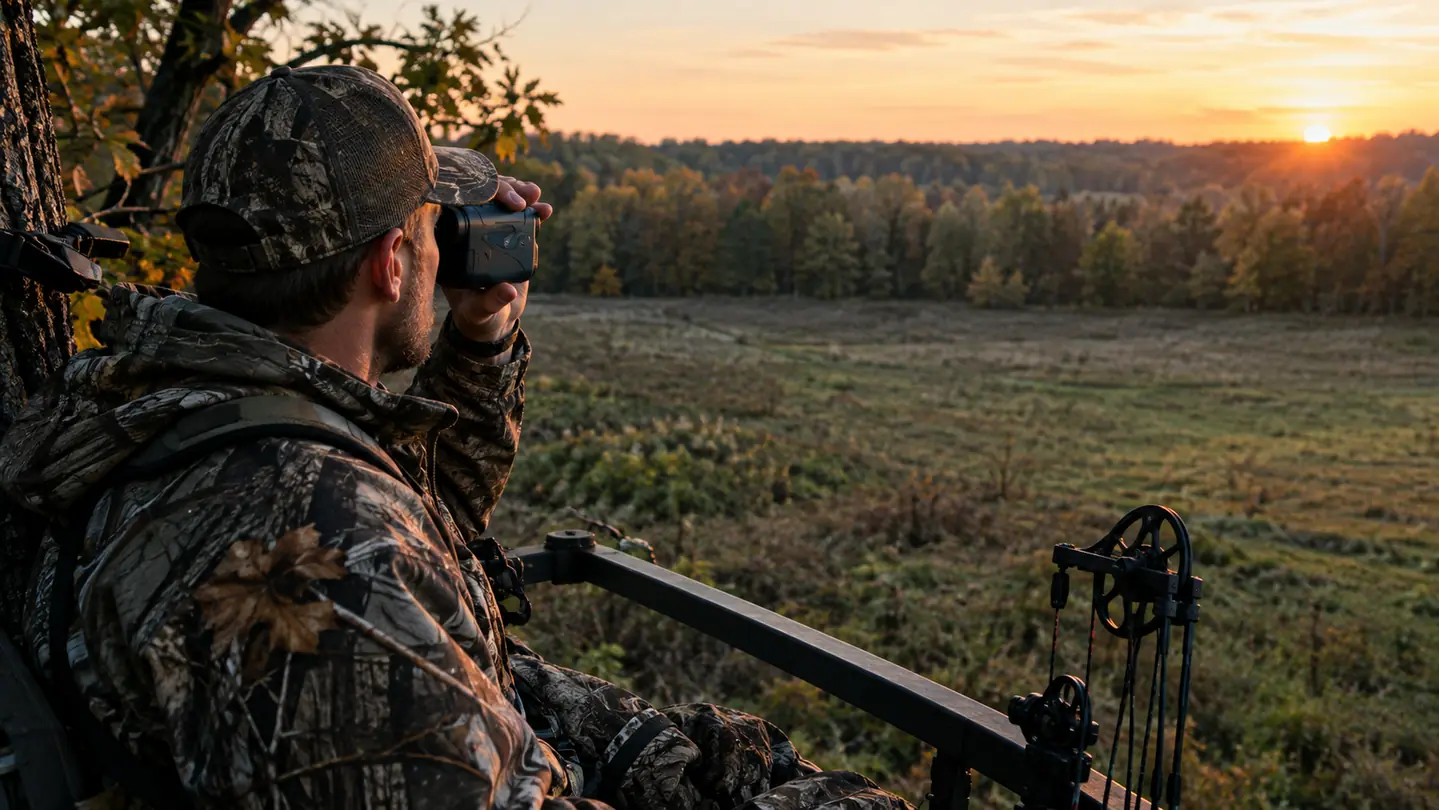
Where the Vortex Crossfire HD 1400 Wins
I am not going to pretend the Vortex does not earn its reputation, because it does. The glass is the big one. On Saturday morning, the last weekend of October, with the sun still below the treeline and the air at 31 degrees, I could pick out individual tines on a buck at the far end of the food plot through the Vortex in a way the TIDEWE could not quite match. It is not a night and day difference, and it did not change the shot I took. But the brightness is real, and I will not pretend otherwise. If you have ever sat in a stand in the last ten minutes of legal shooting light, you know what that last bit of clarity is worth. It is the difference between knowing the buck is a shooter and hoping he is.
The warranty is the other place the Vortex wins, and it is a real win. Vortex backs the Crossfire with a VIP lifetime warranty. No receipt, no questions, and it transfers if you sell the rangefinder. The TIDEWE warranty is fine for what you pay, but it is not that, and I am not going to tell you otherwise. I have owned cheaper gear long enough to know a warranty only matters when something breaks, and when something breaks is exactly when you are glad you paid for it. The build quality is part of the same story. The focus ring turns smooth and the body feels solid in the hand. None of that makes a deer die faster, but it is why the Vortex holds its value. That is the honest trade for spending more money up front.
The Rangefinder That Ended 40 Years of Guessing
The TIDEWE rode with me from the archery opener through the last week of the late season, and I charged it four times. It reads deer out to 200 yards, handles the angle math from a ladder stand, and does not cost Vortex money. See what it goes for on Amazon today.
Amazon Check Today's Price on Amazon →Who Should Buy Which
If you hunt deer from a stand, whether you shoot a compound bow in September or a rifle in November, the TIDEWE is the one I would buy. It does the two things a rangefinder actually has to do, give you an honest distance and correct for the angle, and it does them without a battery ritual. I used it for a full season before I trusted it, and by December I trusted it completely. I am not a gear collector. I am a guy who sits in a ladder stand 20 or 30 times a season and wants the shot to count when it comes. Karen picked it up once when we were fishing and ranged a shoreline point without me having to explain the buttons, which tells you how straightforward it is. It has lived in my pack ever since, and I do not think about it until I need it.
Who should buy the Vortex? If you want the last word in glass, a lifetime warranty, and you plan to keep the same rangefinder for twenty years, the Vortex is the one for you. But if you want a rangefinder that reads deer, sorts out the angle, and never asks for a battery, the TIDEWE is the one I put in my pack every morning last season. It is the one I will put in my pack this season too. The Vortex is a fine tool. I am just not the customer for it, and I suspect a lot of deer hunters are not either. I would rather spend the difference on gas money and license fees than on glass I will never fully use.
Stop Doing the Math in Your Head
Forty years of guessing ended the first week I used the TIDEWE. It reads deer, fixes the angle, and charges about four times a year. If you are still holding your bow up and squinting at a buck, this is the rangefinder to start with. Check today's price on Amazon.
Amazon Check Today's Price on Amazon →