
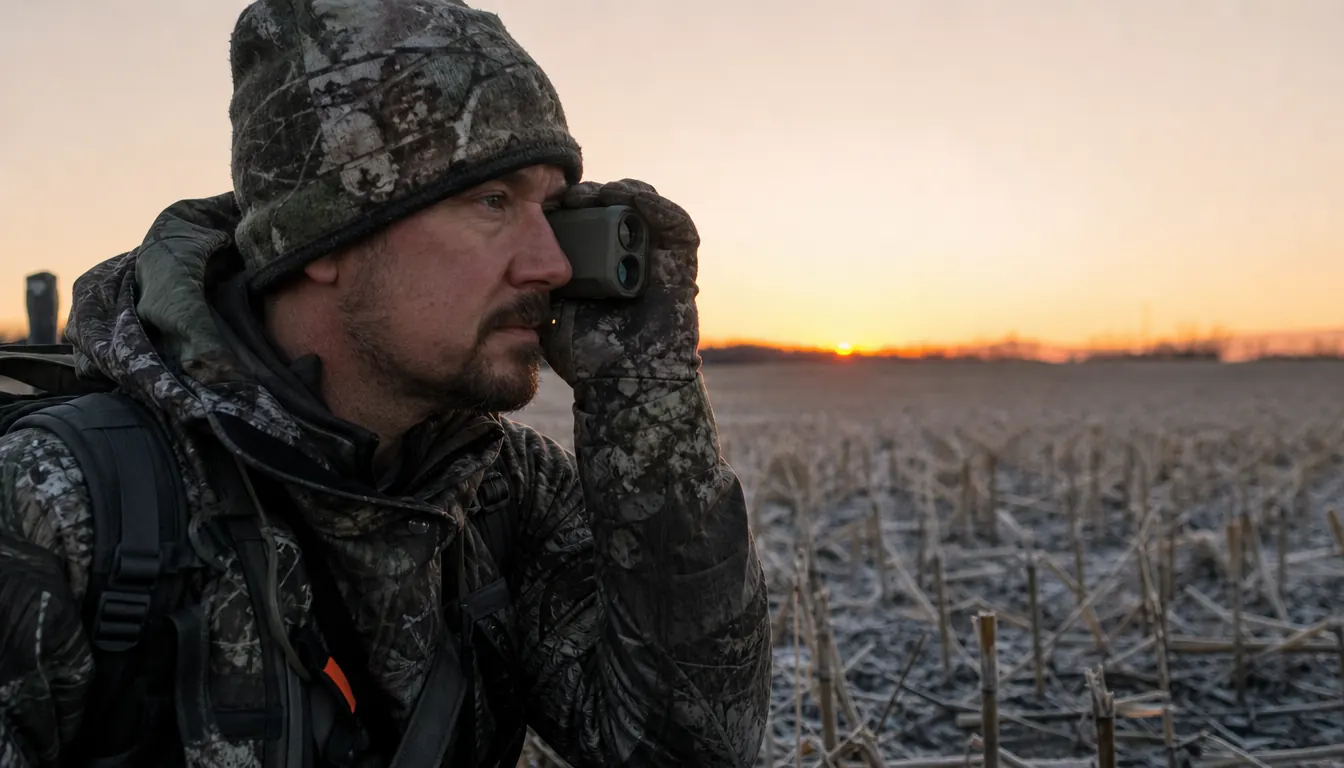
I hunted deer for close to forty years before I owned a rangefinder. I guessed yardage, used the size of the deer in the scope, and let my brain fill in the rest. Last fall, before archery season, I bought a TIDEWE rangefinder and used it through the whole deer season, archery and rifle. This is the honest review, the stuff that usually gets left out of the product page.
The short version is that the TIDEWE rangefinder does its job, and for the way I hunt, it does it well. It also has a few rough edges that nobody tells you about until you are standing in a cold wind with a buck working a scrape line and your mittens are too thick to press the button. I have no reason to oversell it. I am a retired electrical lineman who lives outside Brainerd, and I just want a tool that works when the deer finally shows up.
The Quick Verdict
A rechargeable rangefinder that reads deer out to 200 yards, handles angle compensation from a ladder stand, and only starts to annoy you when the temperature drops and the gloves come out.
Amazon Check Today's Price →Stop guessing the yardage this season
After one full season, I trust this rangefinder for every shot inside 200 yards. Check today's price on Amazon and see the current listing for yourself.
Amazon Check Today's Price on Amazon →How I've Used It
Last September I hung my ladder stand on a friend's 80 acres outside Brainerd, the same stand I have used for years. The field edge is about 180 yards across, and the scrape line runs through a patch of oaks at 35 to 40 yards. That is my whole hunting world: one stand, one field, one trail. The TIDEWE sat on the stand shelf next to my release for three months.
I charged it four times all season. That surprised me. I am used to gear that needs a charge every other sit, so I kept the charging cable in the truck for the first month. After the second week I stopped worrying. Four charges from September through the end of late season, and I never saw the battery warning.
Opening weekend was the first real test. My son came up from the Cities and took the ground blind on the far side of the field while I stayed in the ladder stand. A young buck worked the scrape line at 38 yards just after sunrise, and I ranged him three times to be sure: 38, 38, 37. The one-yard wobble is the kind of thing you only notice when you are checking gear instead of hunting. That afternoon I ranged the food plot sign at 122 yards from the same spot where I had ranged it when I set up the stand the week before, and it read 121. I wrote both numbers in the notebook I keep in the truck, because that is how I check a tool. Repeatability is what sold me. A rangefinder that gives you a different answer every time is not a rangefinder, it is a guess with extra steps. I had been guessing for forty years, and the first thing this unit taught me was how often I had been wrong.
Most of my ranging was between 18 and 42 yards because that is where the deer actually walked. The rangefinder read those distances instantly, even in the gray light of late afternoon. I also used it on the rifle in November, ranging a field edge at 170 yards and a doe at 210. It did not hesitate on either one.
What Nobody Tells You About the Glass
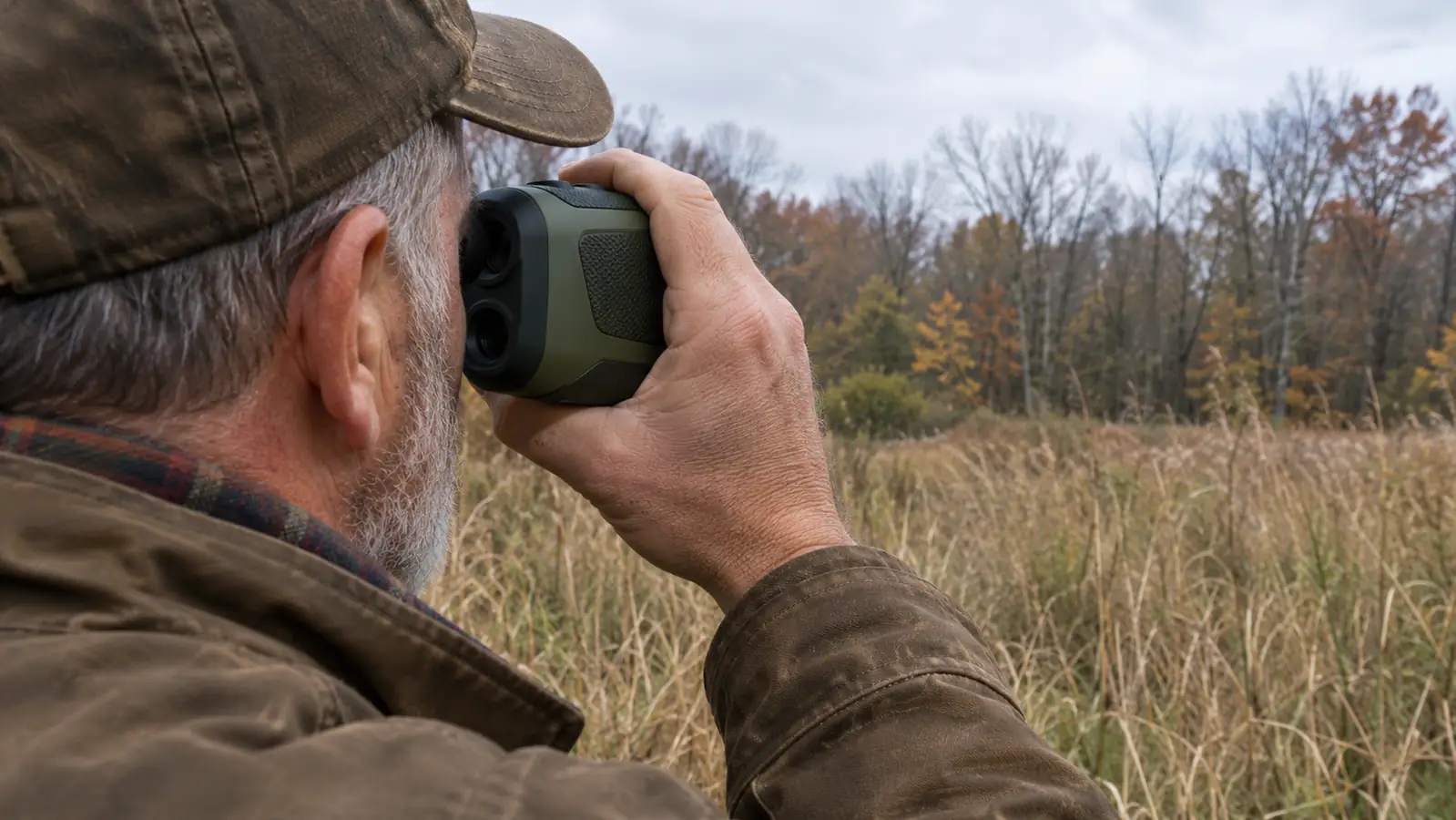
The glass is decent for the money, but it is not top-tier. In bright midday light, the image is clear and I had no trouble picking out a deer against brush. In the last twenty minutes of shooting light, the view gets dimmer than I expected. I could still range a deer standing in the open, but I had to work a little harder to find it in the trees. That is the honest tradeoff at this price.
One evening in late October I watched a doe feed along the tree line until the last ten minutes of legal light. The rangefinder gave me her distance at 54 yards, but I had to shift the unit a few degrees to find her against the dark brush. It cost me about three seconds. Three seconds does not sound like much until an animal is walking your direction and you are trying to decide whether to shoot. I still got the number, and when she turned broadside at 31 yards a few minutes later, I knew the distance before I drew. But I learned to do my ranging earlier in the evening, while there was still enough light to see the reticle clearly. The honest version is this: the glass is good for the money, and it is not the glass on the high-dollar units. In the last light of day, you will notice the difference.
The reticle and numbers are easy to read. I wear reading glasses for close work, and I could see the yardage without fishing them out of my pocket. The display does not overwhelm you with information. It gives you a number and lets you get back to the deer. That is exactly what I want when a buck is moving.
One more thing about the glass: it handles brush better than I expected. A deer standing in front of a tangle of branches will sometimes give you a reading off the nearest branch, and that happens with every rangefinder I have tried. This one did it less often than I thought it would. When it did happen, ranging the same spot twice settled it.
The Button That Drove Me Crazy
The buttons work with thin gloves. I hunt in a lightweight pair of shooting gloves through most of October, and I could press the range button without looking down. When the temperature dropped and I switched to heavy mittens, that changed. The button is small and stiff enough that I had to take the mitten off to get a clean press. On a cold November morning, that is the difference between ranging a deer and watching it walk off.
Nobody tells you this in the listing. They show the rangefinder held in one hand with a deer in the background. They do not show you fumbling with a pair of mittens at 6:40 in the morning with frost on the stand rail. It is not a dealbreaker. It is just real.
The morning it really cost me was the second Saturday of firearms season. The temperature was nine degrees, and a buck crossed the field edge at 85 yards while I was still trying to work my mitten off with my teeth. I had tried pressing the button through the mitten earlier that week, and the mitten is thick enough that the button never clicked. I tried my knuckle too, and that worked maybe half the time. By the time I had the button pressed on that Saturday, he had stepped behind the cedars. I did not get a shot, and I can say honestly that the cold cost me that deer more than the rangefinder did. But a button I could press through the mitten would have given me the number two seconds sooner, and two seconds in November is the whole game. I mention this because the listing photos all show a bare hand on the unit. Nobody takes a photo of the part where you are standing in a nine-degree wind with your glove in your teeth. That is the part you need to know about before you buy.
This is where I admit I should have practiced more with the gloves on. The rangefinder did not change; my expectations did. By late season I had a system: rangefinder in my chest pocket, thin gloves on, heavy mittens hanging from the strap until I needed them. Once I worked that out, the button stopped being a problem.
The Rechargeable Battery, the Part Everyone Skips
The rechargeable battery is the feature that made me pick this over a rangefinder that takes coin cells. I hate buying those little batteries, and I hate finding out at the wrong moment that one is dead. The TIDEWE uses a USB cable, charges fast, and held a charge for weeks at a time. I charged it four times across the whole season, and most of those were because I wanted a full bar before opening weekend, not because it was empty.
The first charge took place the night before archery season opened. I plugged it in on the kitchen counter, and it was full by the time I made coffee the next morning. That set the pattern for the whole season: plug it in overnight, forget about it, and it is ready whenever you are. The meter never dropped below half until late December, after three straight weeks of cold sits, and even then it lasted another week before I bothered to top it off. When I did charge it, it took under an hour to go from below half back to full, which meant I could plug it in during lunch and be ready for the evening sit. I have owned rechargeable gear that lied about its charge, and this unit has not done that once. The charging cable lives in the glove box of my 2013 F-150 now, right where I can find it if I ever need it again.
One honest caution: cold weather affects battery life. I did not notice a problem because I charged it before late season, but I would not leave it in the truck overnight in January and expect a full bar. Bring it inside or keep it in your coat pocket. That is true of anything rechargeable, but it is worth saying.
The charging port is covered by a small flap, and the flap stayed in place all season. I know because I checked it every time I put the rangefinder back in the pouch. A loose flap would have been a dealbreaker for me, since I hunt in rain and snow. This one never gave me a reason to worry.
What It Does Not Do Well
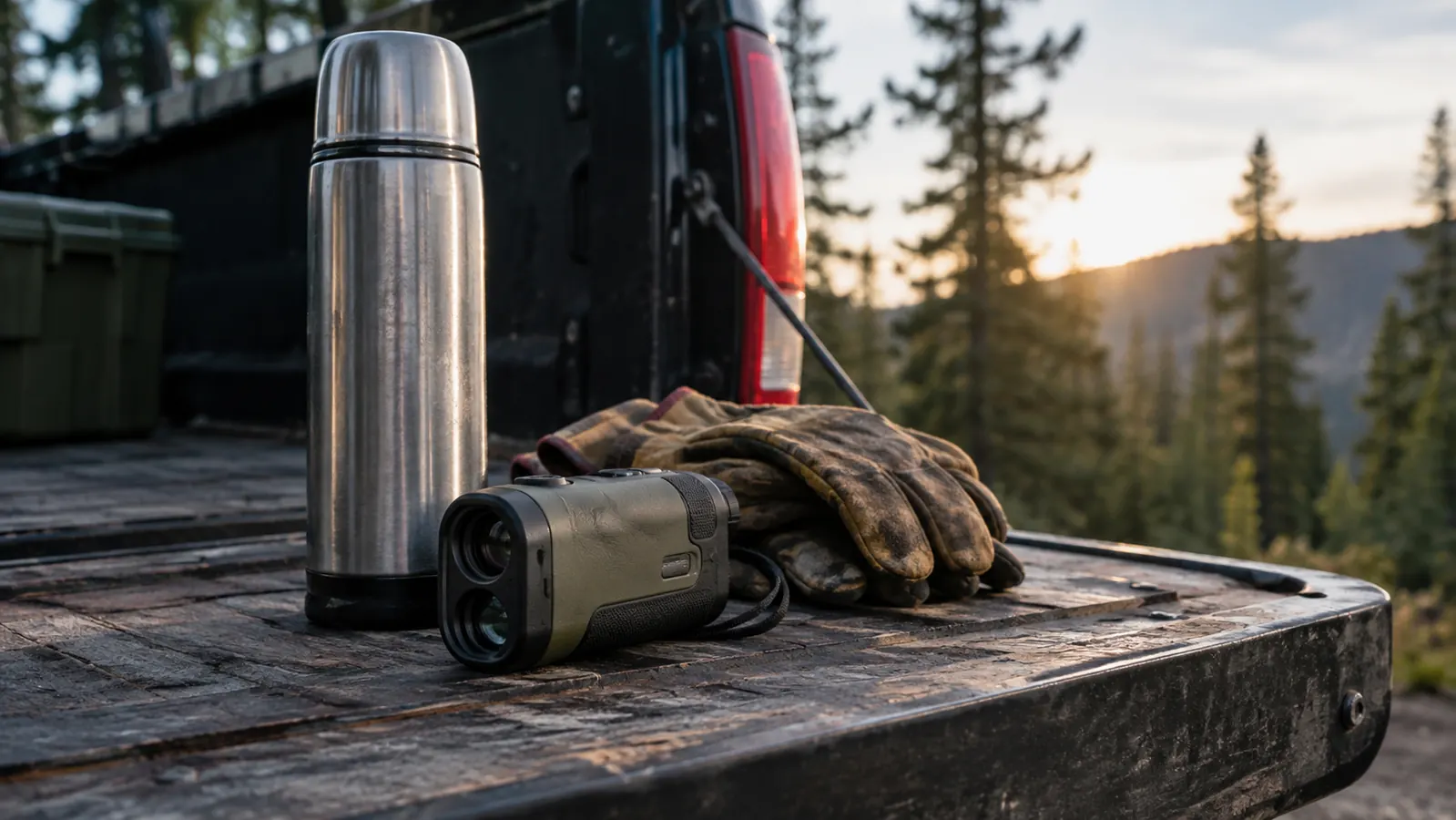
For a bowhunter, the range that matters is the range you actually shoot. I never needed this rangefinder past 42 yards. The TIDEWE read deer reliably at 200 yards, and it locked onto big reflective targets like a metal shed or a road sign much farther. That is plenty for a deer rifle in the areas I hunt. If you are shooting across a bean field at 600 yards, this is not the tool for that. The honest answer is that I never tested it past 210 on an animal, and I would not trust my tag to a number beyond that.
Angle compensation is the feature I did not know I needed. My ladder stand sits about 18 feet up, and a deer at the scrape line is downhill from me. The rangefinder accounts for that angle and gives the true horizontal distance, which is the number that matters for an archery shot. I checked it a few times by ranging a fence post straight out and then from the stand, and the numbers made sense. That alone is worth the money.
The other honest limit is the eye relief. I wear glasses, and I had to find the right spot before the image snapped in. Once I did, it was fine. But it is not the kind of rangefinder where you can hold it loosely and still get a clean read. You need to hold it steady and close to your eye, and that takes a few trips to the stand to learn.
The Case and the Little Things
The included pouch is fine. It is not a fancy hard case, but it has a belt loop and it protects the rangefinder when I am walking in. The lanyard is long enough to go over my head. I added a small carabiner so I could clip it to my pack strap instead of fishing it out of the pouch every time. That is the kind of small thing that makes a season smoother.
One thing I noticed is that the rangefinder is light enough that I forgot it was in my chest pocket. That is a compliment. I have carried heavier units that pulled on my neck all day. This one disappeared until I needed it.
What I Liked
- Reads deer reliably out to roughly 200 yards
- Angle compensation makes ladder-stand shots honest
- Rechargeable battery held up for a full season on four charges
- Clear display and simple controls
- Light enough to forget it is in your pocket
Where It Falls Short
- Buttons are fiddly with heavy mittens
- Glass gets dim in the last light of day
- Not the tool for extreme long-range shooting
- Included pouch works but is basic
Four charges from September through the end of late season, and I never once missed a shot because the battery was low.
Who This Is For
This rangefinder is for hunters like me who hunt from a fixed stand, shoot inside 200 yards, and want a tool that works without a lot of fuss. If you are a bowhunter who needs true horizontal distance from an elevated stand, the angle compensation is worth the price by itself. If you are a rifle hunter who mostly shoots across a field edge or a powerline cut, this will do everything you need and it will not break the bank.
It is also a good choice for someone who has never owned a rangefinder and does not want to spend a fortune to find out if they will actually use one. I went forty years without one. Now that I have used the TIDEWE for a full season, I would not go back to guessing. The confidence it gives you on a shot is hard to put a number on, but it is real.
Who Should Skip It
If you are a serious long-range shooter who needs a rangefinder to hold a laser on a steel plate at 800 yards, this is not the tool. If you hunt in extreme cold for weeks at a time and cannot charge a battery, a unit with disposable batteries might be simpler. And if you wear heavy mittens all season and refuse to take them off, the small button will test your patience.
None of those are reasons to avoid this rangefinder for the average deer hunter. They are just the honest boundaries of what it does. The TIDEWE rangefinder is not trying to be the fanciest thing in the woods. It is trying to give you a true distance when the moment matters, and after a full season I can say it did that for me.
The rangefinder I trusted all season
After one full season, this is the rangefinder that stays in my chest pocket. Check today's price on Amazon to see the current listing.
Amazon Check Today's Price on Amazon →