
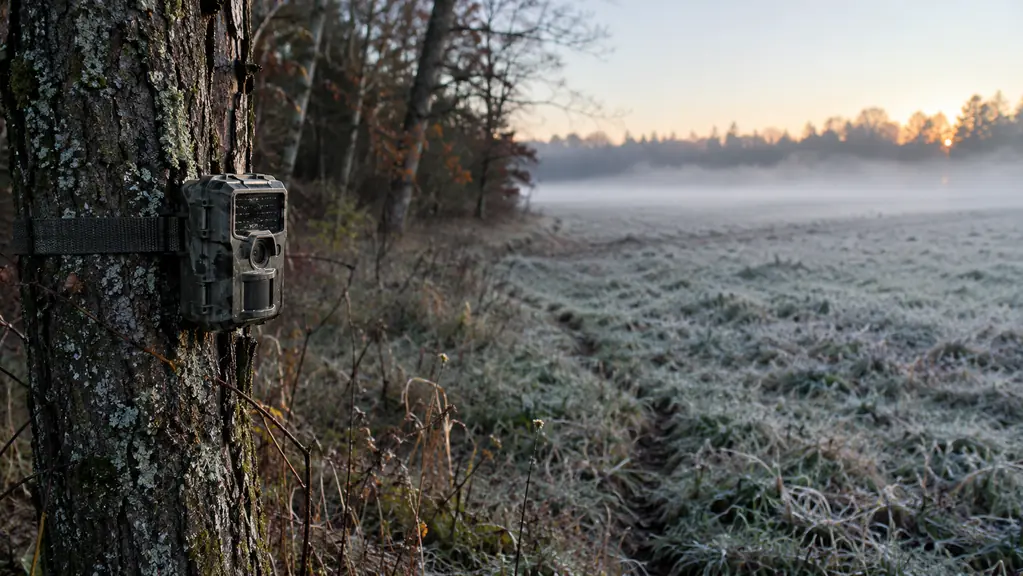
Every trail camera listing I read before I bought these said the same things: 48 megapixels, night vision, motion activated, waterproof. None of them said what the camera actually does when a deer walks past at a normal pace, or what the night photos look like when you pull the card at 6:30 in the morning, or how long the batteries really last in a Minnesota November. That is what this review is for. I hung a WOSODA two-pack in late August on a friend's 80 acres and ran both cameras through one full deer season, archery through the end of the firearms hunt.
I am not a gear reviewer. I am a retired electrical lineman who has hunted deer for about forty years, most of them from a ladder stand with a compound bow in archery season and a deer rifle in November. I have also owned enough cheap cameras to know what a corner-cut looks like. So here is the honest version: the WOSODA two-pack is a good buy for what it is, and there are three or four things the listing does not tell you that you should know before you hang one.
I learned the hard way, with cameras that cost less and broke sooner, that a trail camera has one job: show you what the woods are doing when you are not there. The first cameras I owned felt like toys, and they missed half the action or died in the first cold snap. The WOSODA two-pack understands the job better than any camera I have owned in its price range.
The Quick Verdict
Sharp daytime photos, battery life that carried both cameras through a full season on lithium AAs, and two cameras in the box. The honest weak spots: grainy night shots and a trigger that sometimes catches only the back half of a deer moving fast.
Amazon Check Today's Price →Daytime photos you can read and batteries that last the season.
Two cameras, one full deer season, and an 8.4 out of 10 in my book. The daytime photos are sharp enough to count points, and both cameras ran the whole season on the same set of lithium AAs.
Amazon Check Today's Price on Amazon →How I've Used It
Both cameras went up on the last Saturday of August. One overlooked a scrape line about eighty yards from my ladder stand. The other sat on the edge of a food plot where the deer had been cutting through on their way to water. I set them for three photos per trigger with a one-minute delay, which is the same setting I have used on every camera I have owned.
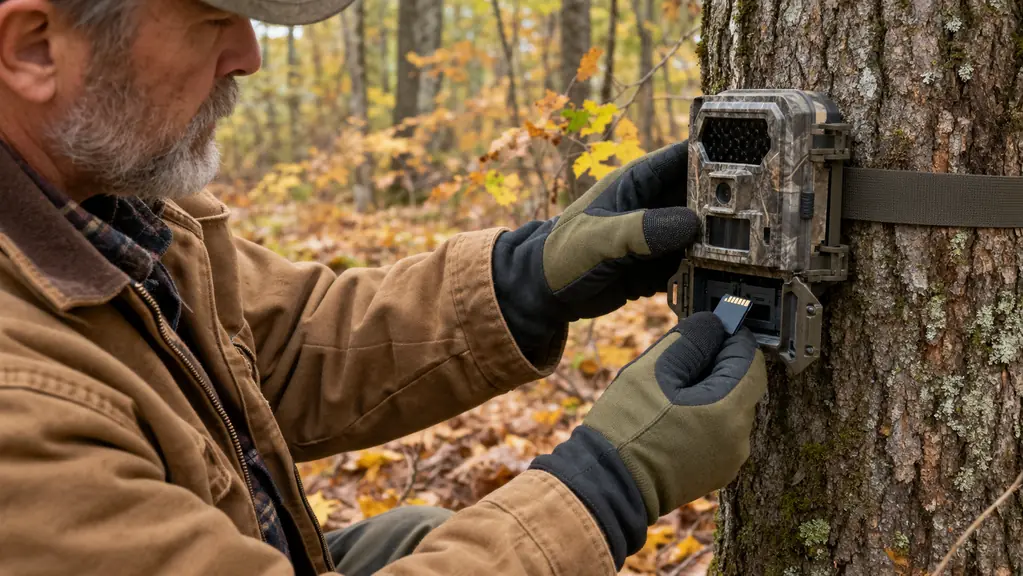
For the first few weeks I checked them every Sunday. Once the season started, I checked them every time I went out, which is usually twice a week. Each check is a walk, a card swap, and a look at the photos on the back of the camera before I pocket the card. That routine is the whole deal with a non-cellular camera, and it is worth saying plainly: these cameras assume you are willing to walk.
The lithium AAs I put in at the start were still running both cameras when I pulled them in early January. I want to be careful with that claim, so I will say it again: both cameras, one set of lithium AAs each, hung in late August, pulled in early January, still working when they came down.
Daytime Photos: Sharp, With One Asterisk
Daytime photos are the reason to buy these. On a sunny afternoon, the detail is genuinely good. I could count points on a buck that walked the scrape line at thirty yards, read the wear on his right front shoulder, and tell you which side of his rack had the broken G2. That level of detail is what you want from a scouting camera, and the WOSODA delivers it.
The asterisk is the 48 megapixel claim. The listing says 48MP, and the files are large, but the real detail is closer to what a smaller sensor produces, with the file stretched to a bigger number. I am not going to pretend I measured it with test charts. I am telling you what the photos look like when you zoom in on a computer screen. The detail you can actually pull out of a daytime image is good, just not 48 megapixels good.
That matters less than you might think. For scouting, for knowing which deer are on the property, for checking a scrape line before you hang a stand, the daytime photos are more than adequate. If you want frameable wall photos, buy a camera with a bigger sensor and a bigger lens. If you want to know what is moving on your 80 acres, these are sharp enough.
Night Photos: Fine for Scouting, Grainy for Framing
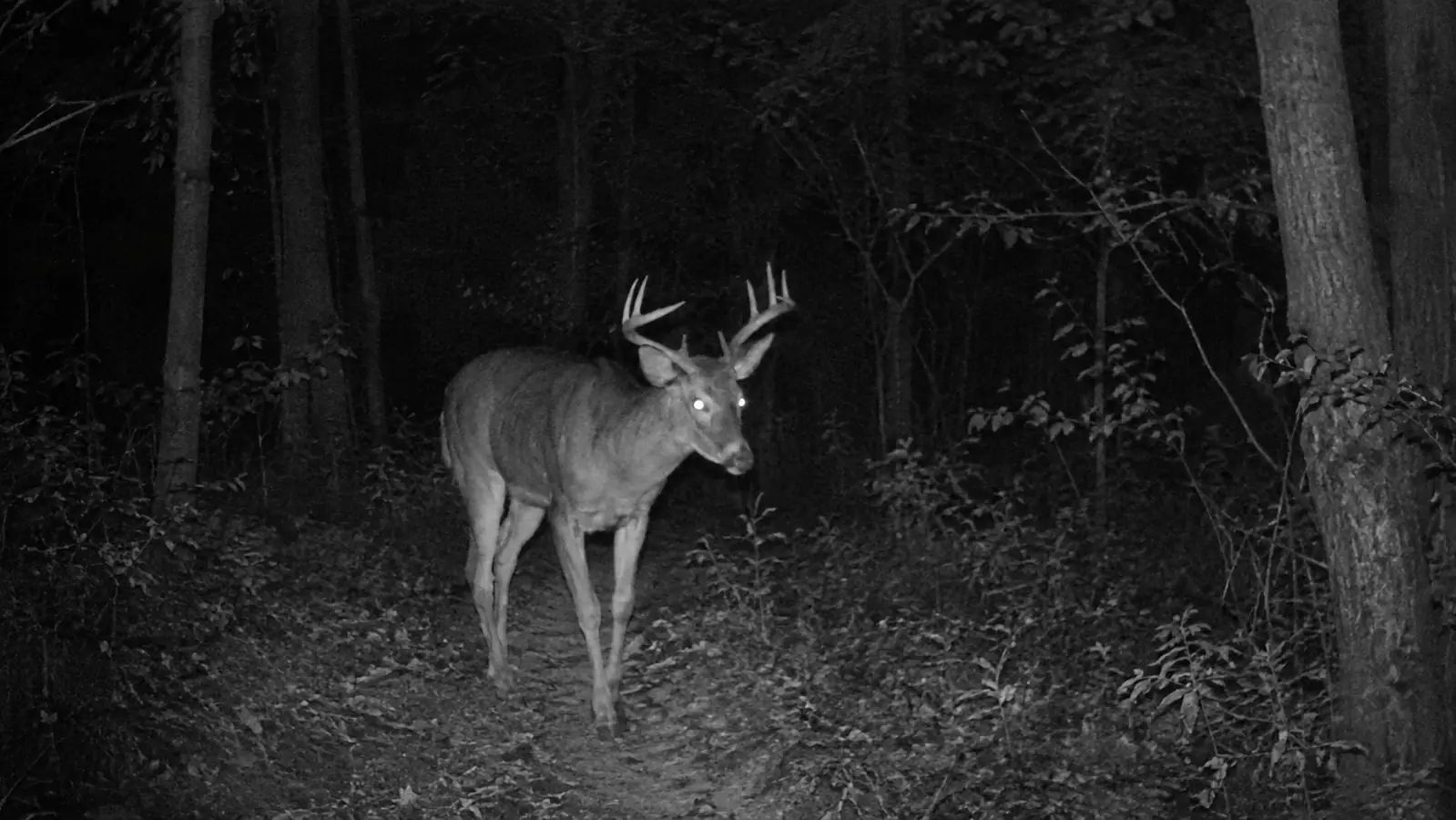
Night photos are where the honest review starts to sound less glowing. The infrared flash throws enough light to identify a deer at close range, and by identify I mean you can tell a buck from a doe and often read antler shape at thirty or forty feet. What you cannot do is count points reliably in the dark. The images have that washed-out, grainy look that every budget IR camera has, and the grain gets worse the farther the deer is from the camera.
I kept them anyway, because night photos are not the reason I hung these cameras. The reason was to know which trail the big buck was using and what time he was using it. A grainy photo of a buck at 2:14 in the morning tells me exactly what I need to know: he is there, he is moving at night, and my stand needs to be closer to that trail. For that job, the night photos work. For anything else, they are average.
One specific example. I had a photo of a buck at 11:40 at night on the scrape line. The image was grainy enough that I could not count points, but I could see the width of the rack and the way he carried his head, and that was enough to move my ladder stand twenty yards closer to that scrape. The camera did its job. It just did not give me a pretty picture of it.
One thing I noticed over the season: the IR LEDs show as a faint red glow when the camera fires at night. It never seemed to bother the deer on this property, but if you are hunting pressured ground, it is something to know before you hang one.
The Trigger: The Honest Weak Spot
Here is the thing nobody tells you about budget trail cameras, and the WOSODA is no exception. The motion trigger is not fast enough to catch a deer that is moving quickly. I have a whole folder of photos that are nothing but the back half of a deer, a tail, and a blur where the front half should be. A deer walking slowly down the trail triggers fine. A deer that has been bumped, or a doe leading a fawn at a trot, will sometimes be halfway through the frame before the shutter fires.
I tested it myself one afternoon. I walked past the camera at a normal pace and it caught me cleanly, face and all. Then I walked past at a jog, and the photo showed my back half disappearing out of the frame. That is the trigger in one sentence.
The workaround is the same one I used on cheaper cameras for years: aim the camera at a spot where deer are likely to pause. A scrape line, a pinch point in the trail, the edge of a food plot. If the camera is looking at a natural stopping point, the trigger lag does not cost you the photo. If you aim it across a wide open field and expect it to catch a deer at a full trot, you will be disappointed.
I want to be fair here. No camera I have owned in this price range caught every fast-moving deer, and I have owned a few that were worse than this one. The WOSODA trigger is average for the price range. It is just not the instant response the listing implies, and you should know that before you hang it.
In four months on the tree, both cameras were still running on the same set of lithium AAs.
Batteries, Straps, and What I'd Add
Battery life is where the WOSODA surprised me. I ran both cameras on lithium AAs, six per camera, and neither one died between late August and early January. That includes a stretch in November and December where the temperature never got above ten degrees for a week at a time. Lithium matters. Alkaline batteries might have made it, but I would not count on it, and I would not run these cameras on anything but lithium.
The coldest check I did was a morning in December when the thermometer on the truck read minus four. The cameras had been out all night, and both fired off a photo of a doe as I walked up to the tree. The batteries did not sag. I cannot ask for more than that from a camera in this class.
The included strap is thin. It works, but it is the weakest piece of hardware in the box, and on a windy night I did not fully trust it. I added a cable lock to both cameras before I hung them, and I would call that a mandatory upgrade rather than an option. The lock is inexpensive and takes two minutes to install, and it means the camera stays where you put it.
The cameras are advertised as waterproof, and I can only say mine never failed. They went up in late August rain, sat through a wet October, and came down in January with snow on the housings. No condensation inside the lens, no dead cards, no corrosion on the battery contacts. That is more than I can say for the first cameras I bought years ago.
Setup is the easiest part. I hung mine with the strap and cable lock, set the time and date on both, and did not touch the settings again all season. If you are comfortable with the menus on a ten-year-old point-and-shoot camera, you will have no trouble with these.
What I'd Tell a Neighbor Over the Tailgate
If a neighbor asked me whether to buy these, I would say yes, with three conditions. Run lithium batteries. Add a cable lock. Aim the camera at a spot where deer pause, not a wide open crossing. Do those three things, and the WOSODA two-pack will do everything you need a scouting camera to do.
I would also tell him not to believe the megapixel number, and not to expect magazine-quality night photos. I would tell him the daytime shots will surprise him, and that the batteries will probably outlast his patience for checking cards. That is the honest summary, and it is the one the listing does not give you.
What I Liked
- Daytime photos are sharp enough to count points and read body condition
- Both cameras ran the entire season on one set of lithium AAs each
- Two cameras in the box, so you can cover a scrape line and a food plot at once
- Weatherproofing held up through rain, snow, and a Minnesota winter
- Setup is genuinely easy: strap, cable lock, time and date, done
Where It Falls Short
- Night photos are grainy and better for scouting than for identifying detail
- The trigger sometimes catches only the back half of a deer moving fast
- The 48MP claim overstates the real detail you can pull from the files
- The included strap is thin and should be backed up with a cable lock
- No cellular option, so you will be walking to check cards
Who This Is For
The WOSODA two-pack is for the hunter who checks cards on foot, who wants to know what is moving on their property without spending cellular-camera money, and who is willing to swap a card twice a week. It is for someone like me: a hunter with a small piece of ground, a ladder stand, and forty years of habit. If that is you, the daytime photos will impress you, the battery life will carry you through a season, and the night photos will tell you what you need to know.
My son hunted with me opening weekend, and we checked the cards together before first light. He is not a gear guy, and even he said the daytime photos were clear enough to pick out individual deer. For a first camera, or a second pair to spread around a property, this two-pack covers a lot of ground.
Who Should Skip It
If you need photos on your phone from your living room, this is not the camera for you. I have never owned a cellular camera, so I cannot compare them fairly, but the whole design of the WOSODA assumes you will walk to the card. If that walk is the part you are trying to avoid, a cellular camera exists for exactly that reason.
I also would not hand these to someone who wants to set and forget. Every non-cellular camera has a rhythm: hang it, check it, swap the card, repeat. If that rhythm sounds like a chore, you will be better served by a camera that sends photos to your phone, and those cameras cost more and need a data plan. I check cards because I like the walk and I do not mind the routine. That is the honest tradeoff. And if you want frameable night photos or a trigger that never misses a running deer, you will want to spend more than this two-pack costs.
Cover your scrapes and trails with the same two-pack I ran.
The WOSODA two-pack earned an 8.4 out of 10 after a full season on my friend's 80 acres. Sharp daytime photos, season-long battery life, and honest limits you now know about before you buy.
Amazon Check Today's Price on Amazon →